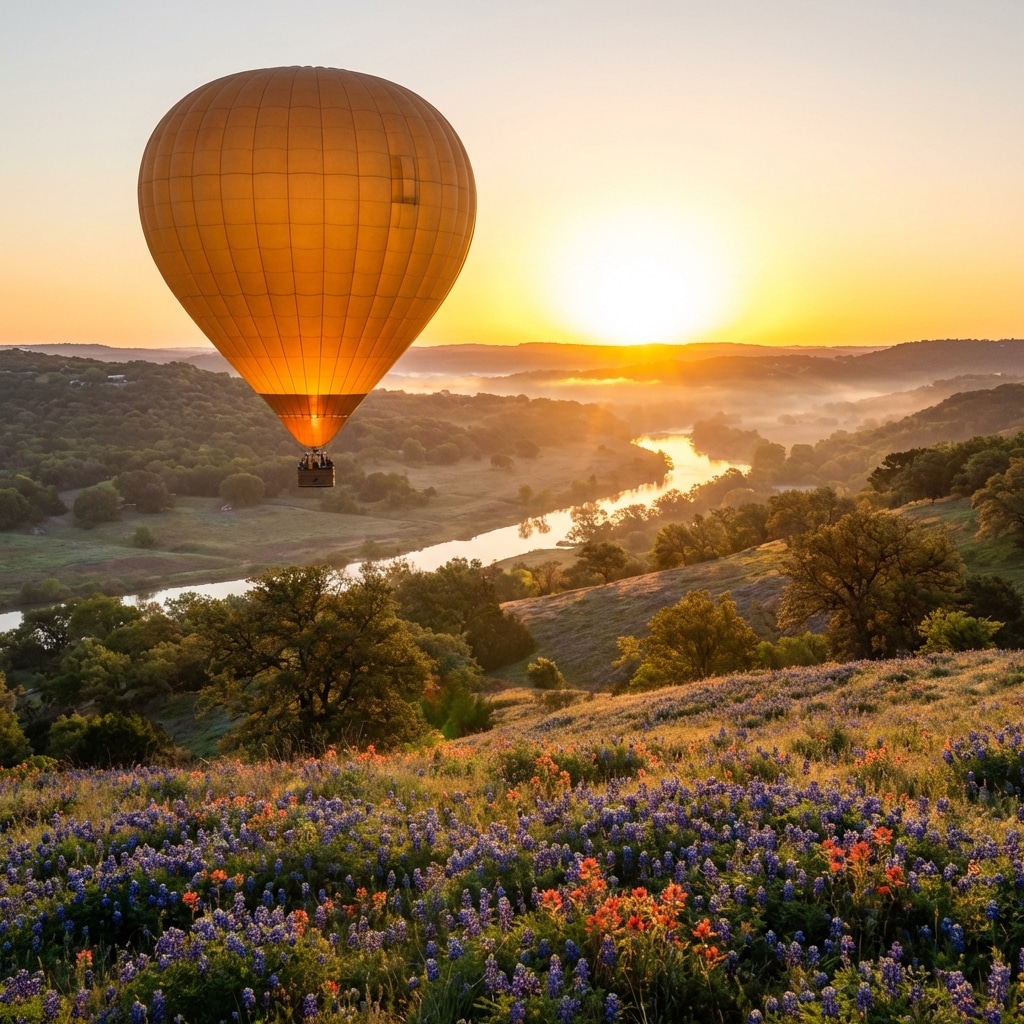
Imagine gracefully lifting off the ground, the world shrinking beneath you as you ascend into a realm of serene silence, painted with breathtaking panoramic views. This isn’t just a dream; it’s the captivating reality of ballooning, an activity that has enchanted humanity for centuries. But what exactly is ballooning, and what makes this age-old mode of flight so uniquely thrilling in our modern world?
Join us as we explore the fascinating definition of ballooning, delve into its remarkable history, unravel the science behind its mechanics, and discover why it continues to capture our imaginations today.
At its core, “ballooning” refers to the act of flying in a balloon that is lighter than the surrounding air. This principle of buoyancy is fundamental, allowing these majestic vessels to float effortlessly skyward. Unlike airplanes or helicopters that rely on mechanical lift, balloons harness the natural properties of gases.
The two primary types of balloons are hot air balloons and gas balloons. Hot air balloons achieve lift by heating the air inside their envelope, making it less dense than the cooler air outside. Gas balloons, conversely, use lighter-than-air gases like helium or hydrogen, which are inherently less dense than atmospheric air.
The Science of Soaring: How Does Ballooning Work?
Understanding how a massive fabric envelope can carry people into the sky is simpler than you might think. It all boils down to basic physics and ingenious engineering.
Buoyancy: The Key to Lift
The magic of ballooning lies in buoyancy, famously described by Archimedes’ principle. A balloon rises when the total weight of the balloon (including its contents, basket, and passengers) is less than the weight of the air it displaces. By filling the balloon with hot air or a lighter gas, its overall density becomes less than the ambient air, generating the lift needed for flight.
Anatomy of a Hot Air Balloon
A hot air balloon typically consists of three main components:
The Envelope: This is the massive, brightly colored fabric bag, usually made of durable nylon or polyester, designed to trap heated air. Its airtight construction is crucial for maintaining lift during flight.
The Burner: Positioned directly above the basket, the burner system uses propane gas to produce a powerful flame. This flame heats the air inside the envelope, causing it to expand and become less dense.
The Basket (Gondola): Traditionally woven from wicker for its strength, flexibility, and light weight, the basket safely carries the pilot and passengers. It’s securely attached to the envelope via strong cables.
Piloting the Unseen Currents
Unlike planes, balloons don’t have rudders or engines to steer directly. Instead, skilled pilots navigate by strategically ascending or descending to find different wind currents. Winds at various altitudes often travel in distinct directions, allowing pilots to steer towards their desired landing zones or follow a particular path. It’s a delicate dance with nature, requiring keen observation and experience.
A Journey Through Time: The Rich History of Ballooning
The dream of human flight took its first tangible form not with wings, but with a buoyant envelope of air. The history of ballooning is a testament to human ingenuity and our endless desire to reach the skies.
The Montgolfier Pioneers: A Revolutionary Flight
The birth of modern ballooning dates back to 1783 in France, thanks to the visionary Montgolfier brothers, Joseph-Michel and Jacques-Étienne. Their groundbreaking invention, a hot air balloon, first carried a sheep, a duck, and a rooster, followed shortly by humans. This pioneering achievement not only showcased the potential for lighter-than-air flight but also ignited a global fascination with aerial exploration.
Evolution to Gas Balloons and Beyond
Following the Montgolfiers’ success, inventors quickly explored other lighter-than-air gases. Just months after the Montgolfier flight, Jacques Charles launched the first hydrogen-filled gas balloon. These advancements opened new possibilities for longer flights, higher altitudes, and eventually led to the development of dirigibles and airships, pushing the boundaries of what was thought possible in the air.
Modern Ballooning: Why We Still Look Up
Today, ballooning has evolved far beyond a scientific curiosity. It’s a vibrant recreational activity, a competitive sport, and a serene escape that continues to captivate hearts worldwide.
Recreational Escapes and Festivals
For many, a hot air balloon ride offers an unparalleled, tranquil experience. Imagine floating peacefully above rolling hills, winding rivers, or bustling cityscapes as the sun rises or sets. Ballooning festivals, such as the renowned Albuquerque International Balloon Fiesta, draw millions annually, transforming the sky into a kaleidoscope of colorful envelopes. These events celebrate the beauty and camaraderie of the ballooning community.
The Thrill of Competitive Ballooning
Beyond leisure, ballooning is also a dynamic competitive sport. Pilots engage in precision flying challenges, races, and navigation tasks that test their meteorological knowledge, piloting skills, and strategic thinking. These competitions push the boundaries of what’s possible with lighter-than-air craft, blending adventure with intense technical prowess.
An Unparalleled Perspective
The slow, deliberate pace of a balloon flight offers a unique perspective of the world below. It’s an opportunity to disconnect from the frantic pace of modern life, soak in vast panoramic vistas, and experience a profound sense of peace. The absence of engine noise, replaced by the occasional whoosh of the burner, adds to the meditative quality of the journey.
Conclusion: The Enduring Magic of Ballooning
From its revolutionary beginnings in 18th-century France to its modern-day appeal as a sport and serene adventure, ballooning is truly a unique and thrilling activity. The “ballooning definition” encompasses a blend of scientific principle, historical ingenuity, and pure human joy.
Whether you dream of taking flight yourself or simply marvel at the sight of these gentle giants drifting across the sky, ballooning serves as a powerful reminder of humanity’s enduring fascination with flight and our innate desire to explore the world from new, breathtaking perspectives.