Ever gazed at a frozen waterfall, its shimmering cascade halted mid-motion, and wondered what it would be like to ascend its icy face? Ice climbing isn’t just a sport; it’s an immersive dance with nature, a test of mental fortitude, and an unparalleled adventure. For those ready to swap the hiking trail for a vertical world of glistening blue ice, understanding the core principles is your first step.
This comprehensive guide is designed for the aspiring ice climber. We’ll break down the essentials, from crucial gear to fundamental techniques and the best places to begin your journey. Prepare to unlock the exhilarating world of beginner ice climbing and discover an adventure unlike any other.

Why Ice Climbing is Your Next Winter Adventure
Beyond the impressive visuals, ice climbing offers a unique blend of physical and mental rewards. It challenges you in ways few other activities can, pushing boundaries and building incredible resilience. Get ready to experience winter landscapes from a completely new perspective.
The Unmatched Thrill of the Ascent
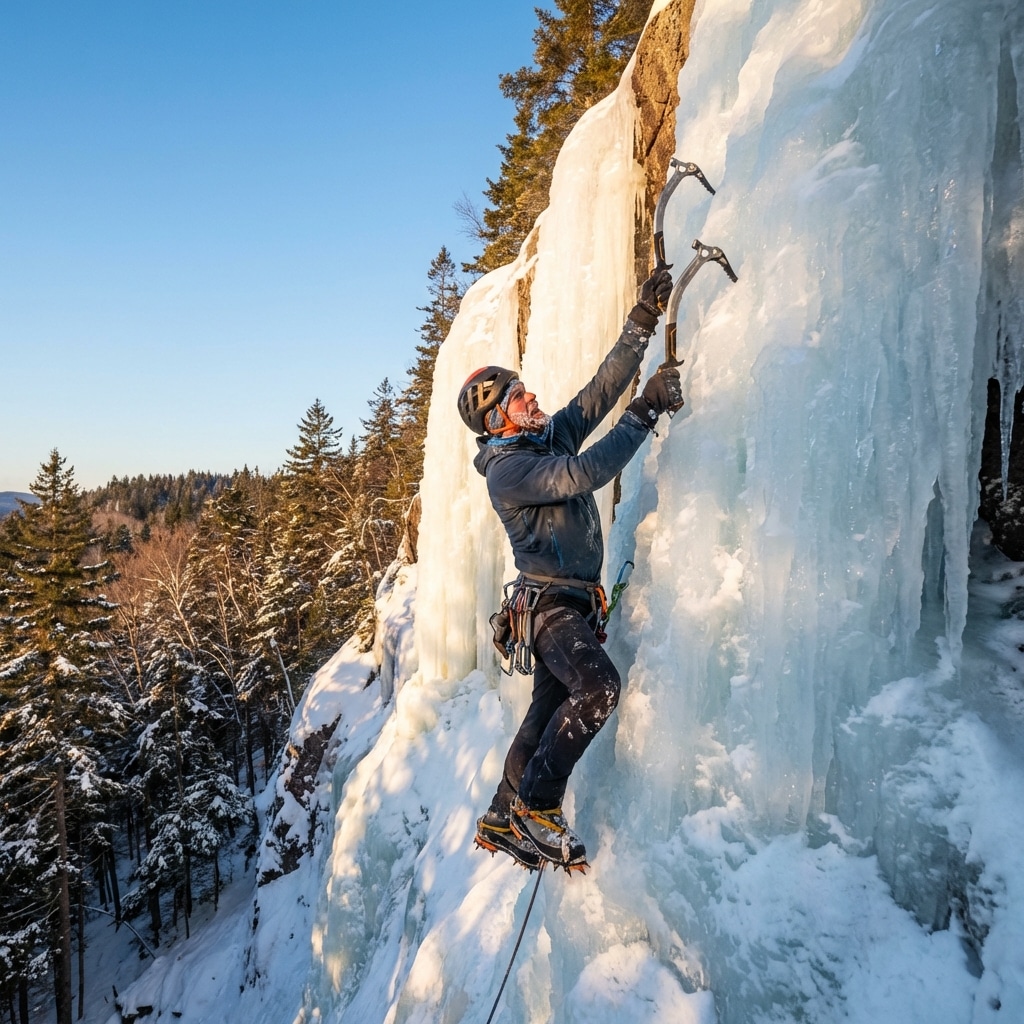
There’s an undeniable adrenaline rush that comes with ascending a frozen column, each swing of the ice axe and kick of a crampon a deliberate commitment. This sport ignites a profound sense of accomplishment as you conquer seemingly impossible vertical terrains. The silence of the icy wilderness, broken only by the rhythmic crunch of your gear, is truly captivating.
A Full-Body and Mind Workout
Ice climbing isn’t just about upper body strength; it’s a full-body engagement that demands core stability, leg power, and strategic thinking. Every movement is a calculated decision, improving problem-solving skills and mental focus. It’s an intense workout that strengthens both your physique and your resolve.
Connect with Nature in a Unique Way
Imagine standing at the base of a frozen torrent, surrounded by snow-laden trees and crisp, clean air. Ice climbing takes you deep into winter’s heart, offering stunning vistas and an intimate connection with the raw beauty of frozen landscapes. It’s an opportunity to witness nature’s artistry up close.
Essential Gear for Your First Ice Ascent
Safety and performance in ice climbing are directly linked to having the correct, high-quality gear. Investing in or renting the right equipment is non-negotiable for beginners. Here’s a breakdown of what you’ll need to confidently tackle the ice.
- Crampons: These sharp metal spikes attach to your boots, providing critical traction and stability on ice. Modern technical crampons are designed for aggressive front-pointing, essential for steep climbs.
- Technical Ice Axes: You’ll typically use two. These specialized tools feature curved shafts and aggressive picks, designed to penetrate and hold firmly in hard ice. They are your primary means of propulsion and balance.
- Climbing Helmet: Paramount for safety, a helmet protects your head from falling ice, rockfall, and impacts during a fall. Always wear one, even on easy routes.
- Climbing Harness: A comfortable and secure harness is essential for tying into the rope and attaching essential gear. Look for one designed for winter use, accommodating extra layers.
- Ropes: Dynamic climbing ropes absorb the force of a fall, crucial for safety. Always use ropes specifically rated for climbing.
- Mountaineering Boots: Sturdy, insulated, and waterproof boots are a must. They must be rigid enough to support crampons and keep your feet warm in freezing conditions.
- Layered Clothing: Dress in layers to adapt to changing temperatures and exertion levels. Start with moisture-wicking base layers, add insulating mid-layers, and finish with a waterproof, breathable outer shell. Don’t forget warm gloves!
- Ice Screws & Quickdraws: While typically used by leads, understanding these for anchor building is crucial. Ice screws are placed into the ice to create secure anchor points for ropes and protection.
- Belay Device: Used with your harness and rope, a belay device allows you to control the rope and safely manage a climbing partner.
Mastering the Fundamentals: Beginner Ice Climbing Techniques
Ice climbing isn’t just about brute strength; it’s about grace, precision, and efficient movement. Learning proper technique from the outset will enhance your safety and enjoyment. Professional instruction is invaluable for mastering these skills.
The Fluid Ice Axe Swing
Forget powerful, frantic swings. The key to effective ice axe placement is a controlled, precise swing that aims for solid, audible “thunks.” Practice swinging from the shoulder, letting the weight of the axe do the work, aiming for clean penetrations rather than shattering the ice.
Strategic Foot Placement with Crampons
Your feet are your foundation. Learn to “front-point” by kicking the front points of your crampons directly into the ice, keeping your heels low for maximum penetration. Develop the “French technique” for less steep terrain, which involves weighting the inner or outer edges of your crampons. Always strive for three points of contact (two feet, one axe or two axes, one foot).
Building Secure Anchors with Ice Screws
Understanding how to construct reliable anchor systems using ice screws is critical for safety. This involves placing screws securely, testing their strength, and equalizing forces. While beginners might not lead climb immediately, knowing anchor principles is foundational for belaying and setting up top ropes.
Efficient Movement and Rest
Conserving energy is crucial in ice climbing. Learn to find stable stances to rest your forearms (“ice axe droops”) and shake out fatigue. Maintain a rhythmic pace, minimizing wasted movements, and always look for natural features to stand on or hook your tools into.
Where to Learn and Climb: Top Beginner-Friendly Destinations
Choosing the right location for your first ice climbing experience makes all the difference. Many places offer accessible routes and, more importantly, certified instructors who can guide you safely. Start with controlled environments before venturing into the backcountry.
Guided Courses are Key
For absolute beginners, enrolling in a guided ice climbing course is paramount. Certified instructors teach you everything from knot tying and belaying to axe technique and hazard assessment. These courses often provide rental gear and ensure a safe, educational introduction.
Iconic Beginner Venues
- Ouray Ice Park, Colorado, USA: This world-renowned man-made ice park is a mecca for climbers of all levels. With hundreds of routes, easy access, and a focus on safety, it’s an ideal spot for beginners to learn and practice in a controlled environment.
- Lake Louise, Alberta, Canada: Nestled in the Canadian Rockies, Lake Louise offers stunning natural ice climbs with several accessible options suitable for beginners. Many local guiding companies operate here, providing excellent instruction.
- Kandersteg, Switzerland: A European gem for ice climbers, Kandersteg boasts a wide array of frozen waterfalls, many with straightforward approaches and varying difficulties. Its popularity ensures a good presence of guides and climbing schools.
- Valdez, Alaska, USA: While more remote, Valdez offers some spectacular ice climbing, including roadside attractions accessible to those with basic skills and guided instruction. The sheer volume and quality of ice are breathtaking.
Prioritizing Safety: A Climber’s Mantra
Ice climbing, while thrilling, carries inherent risks. A strong commitment to safety protocols and continuous learning is non-negotiable. Always remember that your life, and the lives of your partners, depend on sound judgment and preparation.
Never Climb Alone
The buddy system is vital in ice climbing. Always climb with a trusted partner who is equally knowledgeable and capable. Communication, mutual support, and shared responsibility are cornerstones of a safe climbing experience.
Assess Ice Conditions Vigilantly
Ice is a dynamic medium. Learn to identify different ice types (e.g., solid blue ice, aerated ice, rotten ice) and understand how temperature and sun exposure affect its stability. Conditions can change rapidly, so constant assessment is crucial.
Professional Instruction is Paramount
Never attempt ice climbing without proper training from certified instructors. They teach you not only the techniques but also critical safety procedures, rescue skills, and risk management. This foundational knowledge is irreplaceable.
Know Your Limits and Progression
Start small and progress gradually. Don’t push beyond your current skill level or comfort zone, especially when conditions are challenging. Respect the mountain, the ice, and your own capabilities.
Ready to Embrace the Ice? Your Next Steps
Embarking on your beginner ice climbing journey is an incredible decision. It’s a sport that builds confidence, physical prowess, and a deep appreciation for the natural world. With the right preparation, gear, and mindset, you’re set for an unforgettable adventure.
Begin by researching reputable guiding services or climbing schools in one of the beginner-friendly locations mentioned. Renting gear for your first course is often a practical choice before committing to purchases. The frozen vertical world awaits—are you ready to answer its call?