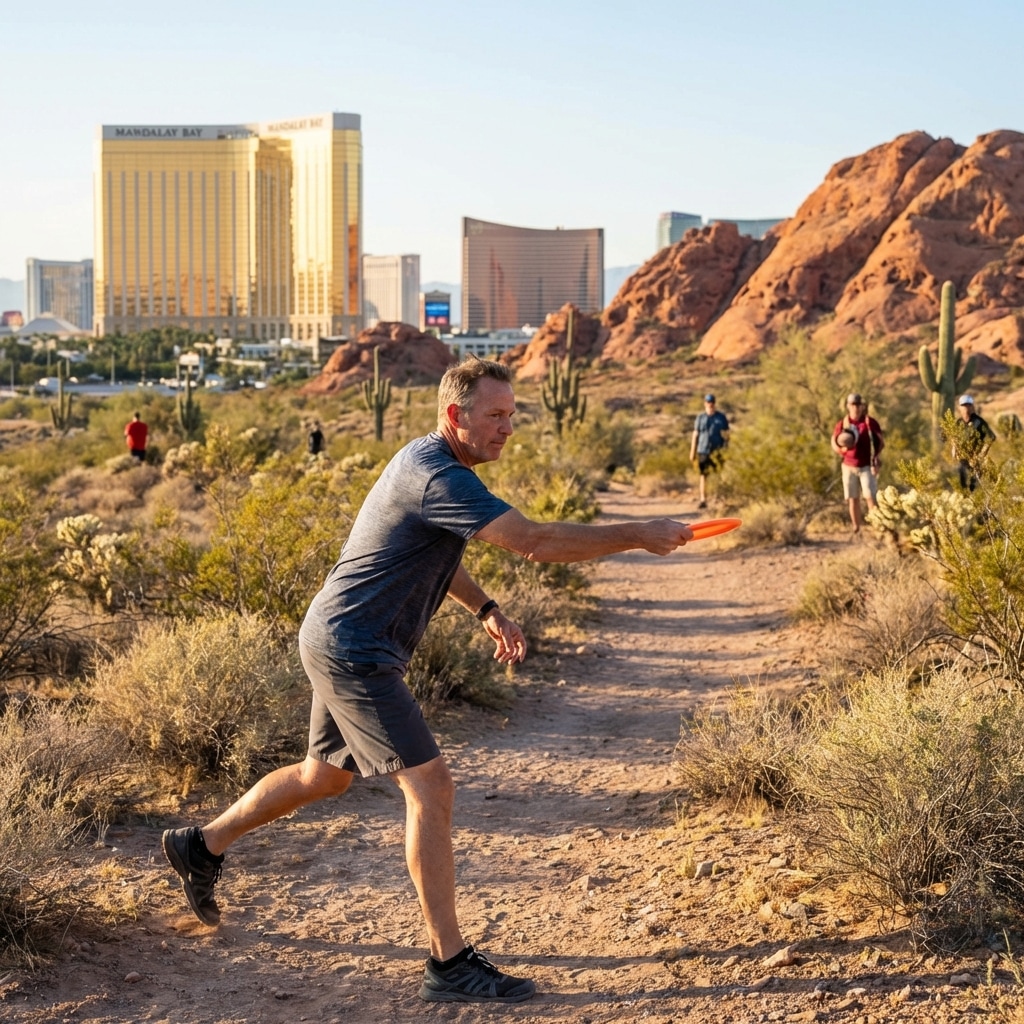
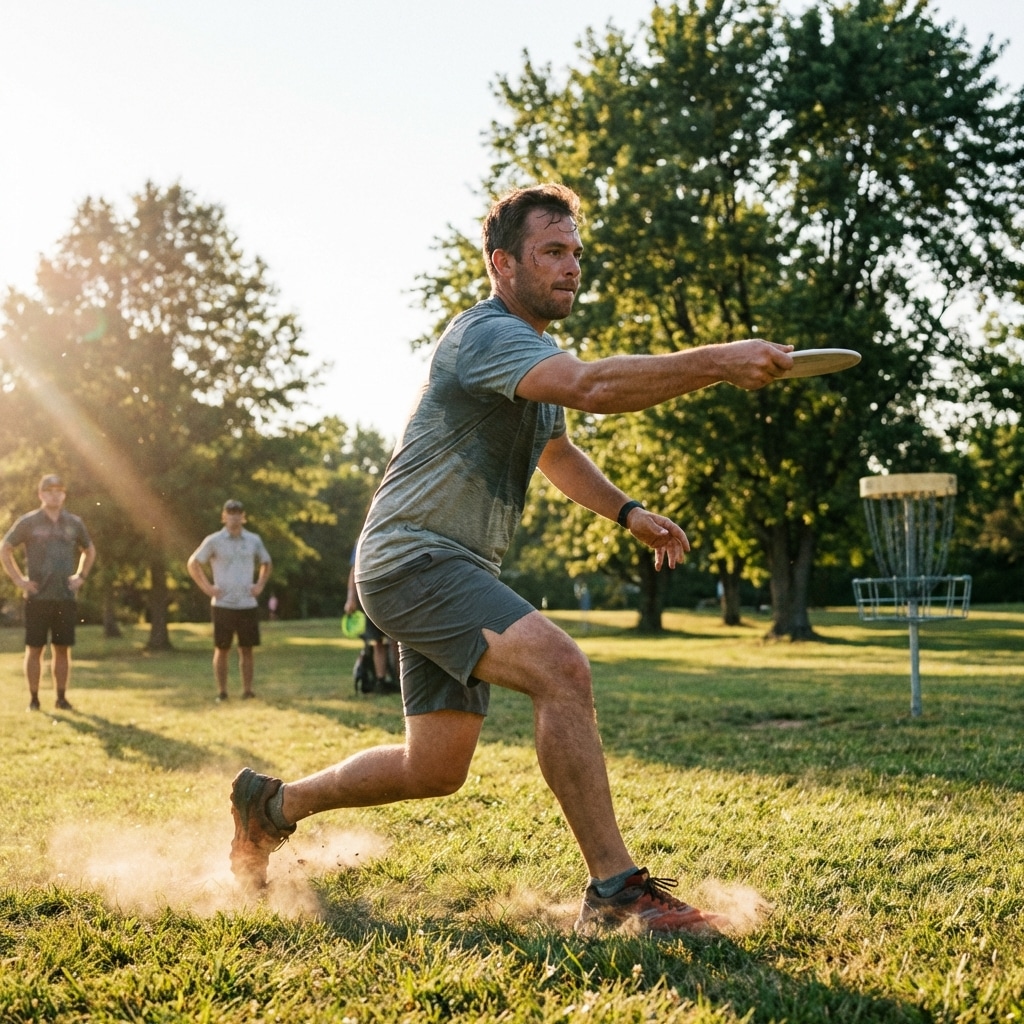
Are you searching for an engaging outdoor activity that blends strategy, skill, and a refreshing dose of physical exercise? Look no further than disc golf. Often called Frisbee golf, this popular sport challenges players to navigate a course by throwing specialized flying discs into metal basket targets, completing each “hole” in the fewest throws possible. It’s a fantastic game for all ages and skill levels, playable in diverse settings from bustling city parks to serene rural landscapes.
Whether you’re a complete novice curious about the game or an experienced player seeking to refine your knowledge, this comprehensive guide will walk you through the disc golf basics, essential equipment, fundamental rules, and crucial scoring. Get ready to discover your new favorite outdoor passion!
What Exactly Is Disc Golf?
Disc golf is a precision and accuracy sport where players throw a flying disc from a designated tee area toward a target, typically a metal basket with chains. The goal is simple: complete each hole by getting your disc into the basket in the fewest throws possible.
Disc golf courses are typically set up in outdoor environments like public parks, woodlands, or open meadows. Each course usually features 9 or 18 holes, with each hole presenting its own unique layout, challenges, and natural obstacles designed to test your throwing prowess.
Why Should You Start Playing Disc Golf?
Beyond being a fun way to spend time outdoors, disc golf offers a wealth of benefits that make it an appealing activity for almost anyone.
Accessible & Affordable: Compared to many sports, disc golf has a low barrier to entry. A few discs are all you need, and most public courses are free to play.
Great Exercise: Walking a course provides a fantastic low-impact cardio workout, often covering several miles over a round. Plus, the throwing motion engages core muscles and improves coordination.
Connect with Nature: Courses are often nestled within scenic parks and natural areas, offering a chance to enjoy fresh air and beautiful surroundings.
All Ages & Abilities: The game can be enjoyed by children, adults, and seniors alike. You can play at your own pace and skill level, making it a perfect family activity.
Mental Challenge: Each hole presents a puzzle of strategy, requiring you to consider disc choice, wind conditions, and shot placement to navigate obstacles effectively.
Essential Disc Golf Equipment You’ll Need
To get started, you don’t need much, but understanding the specialized equipment will significantly enhance your experience.
Disc Types: Your Arsenal for the Course
Unlike a standard recreational Frisbee, disc golf discs are engineered for specific flight patterns and purposes. Most beginners start with a lightweight, stable disc that’s easier to control.
Drivers: These discs are designed for maximum distance. They have sharper edges and are typically used for your initial tee shot on longer holes.
Mid-Range Discs: Offering a balance of distance and control, mid-range discs are versatile. They’re perfect for approach shots where you need accuracy to get close to the basket.
Putters: These discs have a blunt edge and a straighter, slower flight path. They are used for short, accurate throws into the basket, resembling a putt in traditional golf.
Other Must-Have Gear
Disc Golf Bag or Backpack: Essential for carrying your discs, water, snacks, and other essentials comfortably around the course.
Scorecard & Pencil: Keep track of your throws per hole. Many courses also have digital scoring apps available.
Mini Marker Disc: A small disc used to mark the spot where your previous throw landed before your next shot.
Comfortable Shoes & Clothing: You’ll be doing a lot of walking, often on uneven terrain. Opt for supportive footwear and weather-appropriate attire.
How to Play Disc Golf: A Step-by-Step Guide
Disc golf is straightforward to learn, making it accessible for players of all skill levels. Here’s a breakdown of how a typical hole is played:
1. The Objective
Like traditional golf, the goal is to complete each hole in the fewest number of throws possible. The player with the lowest total score at the end of the round wins.
2. Teeing Off
Each hole begins at a designated tee pad. Players take turns throwing their disc from behind the front edge of the tee pad towards the target. On subsequent holes, the player with the lowest score on the previous hole typically tees off first.
3. Making Your Approach
After everyone has thrown their initial tee shot, players proceed to their discs. The player whose disc is furthest from the target always throws next. You throw from directly behind where your disc landed, taking care not to step past your lie (the spot where your disc came to rest).
4. Putting for the Basket
Once your disc is close enough to the basket, you’ll make your “putt.” The objective of the putt is to land the disc into the chains of the metal basket. Once your disc comes to rest in the basket, you have completed the hole.
5. Scoring
Count the total number of throws it took you to get your disc from the tee pad into the basket. This number is your score for that hole. The person with the lowest score at the end of the entire course wins the round. Remember: lower scores are better!
Common Disc Golf Rules & Etiquette
While specific rules can vary slightly by course or tournament, these fundamental guidelines will ensure a fair and enjoyable game for everyone.
Basic Rules
Out-of-Bounds (OB): If your disc lands in a designated out-of-bounds area (e.g., water, a road, private property), you typically incur a penalty stroke and throw from a designated drop zone or where your disc last crossed into bounds.
Marking Your Lie: Before making your next throw, place your mini marker disc directly in front of your thrown disc on the line of play. You must throw from directly behind this marker.
Mandatories (Mandos): Some courses feature mandatory routes (indicated by arrows on trees or signs) that require your disc to pass on a specific side of an obstacle. Failing to do so usually results in a penalty.
Foot Faults: When throwing, ensure that your supporting foot is within the designated playing area (e.g., behind the tee pad, or behind your mini marker).
Course Etiquette
Safety First: Always ensure the area ahead is clear before throwing. Yell “FORE!” if your disc is heading towards other players or pedestrians.
Pace of Play: Keep up with the group in front of you. If you’re falling behind, consider letting faster groups play through.
Respect the Course: Leave no trace. Pack out everything you pack in. Avoid disturbing wildlife or damaging foliage.
Be Mindful of Others: Don’t talk or make noise when someone is throwing. Offer to help spot lost discs.
Ready to Hit the Disc Golf Course?
Now that you’re armed with the basics of disc golf, the equipment you’ll need, and how to navigate the course, it’s time to put theory into practice! Grab a few discs, find your nearest course, and invite some friends.
With a little practice, patience, and dedication, you’ll quickly improve your throws, master the greens, and discover why disc golf has captivated millions worldwide. Who knows? Your journey to becoming a disc golf champion starts today!