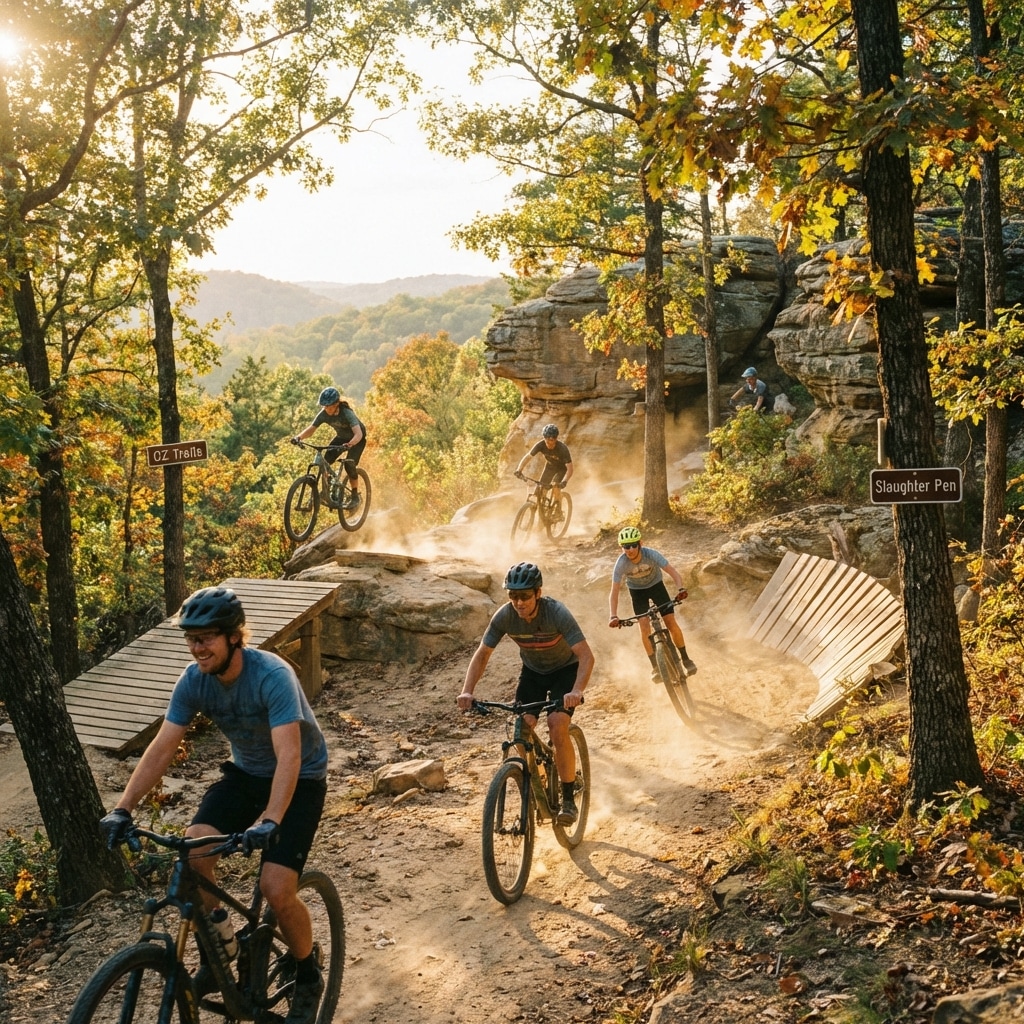
Feel the rush of wind, the blur of the forest, and the adrenaline surge as you rocket down a mountain. This isn’t just cycling; it’s downhill mountain biking – a high-octane sport where gravity is your best friend and the trail is your playground. If you crave speed, technical challenges, and an intense connection with rugged terrain, then downhill mountain biking might just be your calling.
Downhill mountain biking (often shortened to DH) is a specialized discipline where riders race against the clock down steep, technical trails. These courses are riddled with natural and man-made obstacles like jumps, rock gardens, roots, drops, and berms, pushing both rider skill and bike technology to their limits. Speeds can reach exhilarating highs, often exceeding 70 mph (113 km/h) on some professional tracks, making it one of the most thrilling forms of cycling.

The Thrilling Evolution: A Brief History of Mountain Biking & Racing
Mountain biking as a whole traces its roots back to California in the 1970s and early 1980s. Enthusiasts began modifying cruiser bikes (“klunkers”) to handle the rough fire roads and trails of Marin County. These early machines were heavy but incredibly stable, designed for adventurous descents.
Competitive downhill racing quickly emerged from this burgeoning scene in the mid-1970s. Riders started pushing their limits, seeking faster ways to conquer gravity. As the sport gained traction, the demand for specialized equipment grew. Bike designers began crafting purpose-built downhill bikes that were stronger, more durable, and featured advanced suspension systems to handle the increasing speeds and impacts.
Pioneers like Greg Herbold, a legend in the sport, showcased the potential of these dedicated downhill machines. In 1990, Herbold set a world record in Mammoth Lakes, California, demonstrating just how fast riders could descend on purpose-built bikes. The evolution continues today, with cutting-edge technology constantly redefining what’s possible on two wheels.
Exploring the Diversity: Types of Competitive Mountain Biking
While downhill mountain biking stands out for its raw speed and gravity-defying feats, it’s just one facet of the diverse world of competitive mountain biking. Here’s a look at some of the other popular disciplines:
- Cross-country (XC)
- Gravity Enduro (Enduro)
- Dual Slalom
- Super D
- Downhill (DHI/DH)
- Four-cross (4X)
- Pump Track Racing
- Cross-country Eliminator (XCE)
Cross-country (XC)
Cross-country mountain biking is often considered the most physically demanding discipline, focusing on endurance and aerobic fitness. XC races involve a mix of uphill climbs, technical descents, and flat sections over varied off-road terrain, including roots, rocks, mud, and gravel. Riders must navigate a challenging course with sustained effort.
XC bikes are engineered for efficiency and lightweight performance. They typically feature 80-120mm of suspension travel, usually air-sprung, and 29-inch wheels are now the dominant standard, though 27.5-inch wheels are still seen. While capable of descending, XC bikes prioritize climbing prowess and pedal efficiency over extreme downhill capabilities.
Gravity Enduro
Enduro racing blends the best of downhill speed with cross-country endurance. Riders tackle multiple timed downhill stages, often with untimed uphill transfers between them. The emphasis is on descending skill and speed, but riders also need the fitness to complete the climbs, which can be significant.
Enduro bikes are versatile machines, designed to climb reasonably well but truly excel on descents. They feature more suspension travel than XC bikes (typically 150-170mm), slacker geometry for stability, and robust components to handle aggressive riding. This discipline requires a strong balance of strength, bike handling, and endurance.
Dual Slalom
Dual slalom pits two riders against each other, head-to-head, on identical, parallel courses. The goal is to complete your run faster than your opponent. These courses are specifically designed with jumps, berms, rollers, and gates that demand precision, speed, and quick reflexes.
Dual slalom is a thrilling, spectator-friendly event. While speeds can be high, the courses are typically shorter and more controlled than full downhill tracks, emphasizing rider skill in navigating tight, technical features. Riders usually get two runs, switching lanes, with their best time often counting.
Super D
Super D is a less common format that combines elements of cross-country and downhill. It features a race course with significant downhill sections interspersed with pedaling sections, often including uphill climbs. The emphasis is on a balance of descending speed and pedaling power.
Bikes for Super D are typically robust trail or enduro bikes, designed to handle both aggressive descents and efficient pedaling. The racing format rewards riders who can maintain high speeds through technical terrain while still having the aerobic capacity to pedal strong on the flatter or uphill sections.
Downhill (DHI/DH)
This is the pinnacle of gravity racing. Downhill races are timed runs from the top to the bottom of incredibly steep, rough, and rocky courses. These tracks feature dramatic elevation changes, huge jumps, drops, and highly technical sections that demand maximum commitment and skill.
Downhill bikes are purpose-built for extreme descents. They boast massive suspension travel (typically 190-200mm or more), incredibly slack head angles for high-speed stability, and robust components like powerful disc brakes and reinforced frames. While exceptionally fast downhill, they are very heavy and inefficient for climbing.
Four-cross (4X)
Four-cross is an exciting discipline where four riders race simultaneously down a man-made track. The courses are designed with jumps, berms, and rollers, allowing riders to pump for speed and gain air. It’s a sprint to the finish line, and tactical passing is key.
4X bikes are generally hardtail or short-travel full-suspension bikes, prioritizing agility, acceleration, and the ability to pump through features. The close-quarters racing makes for intense action and high potential for dramatic overtakes or crashes.
Pump Track Racing
Pump track racing takes place on a continuous loop of rollers and berms, designed to be ridden without pedaling. Riders “pump” their bodies up and down over the undulations to generate and maintain momentum. It’s a test of smooth technique, body control, and rhythm.
Riders often use agile BMX bikes or dirt jump-style mountain bikes for pump track racing due to their stiffness and responsiveness. It’s a fantastic way to develop fundamental bike handling skills that translate to all other mountain biking disciplines.
Cross-country Eliminator (XCE)
XCE is a fast-paced, urban-friendly variant of cross-country. Riders compete in short, intense heats on courses that typically feature a mix of natural and artificial obstacles. Heats usually involve four riders, with the fastest two advancing to the next round until a final winner is crowned.
These races are explosive bursts of power and strategy, making them highly engaging for spectators. The courses are designed to create bottlenecks and opportunities for strategic overtaking, ensuring exciting, unpredictable outcomes.
Your Downhill Mountain Biking FAQs Answered
Is downhill mountain biking hard?
Yes, downhill mountain biking is a challenging sport that requires a significant level of skill, physical fitness, and mental fortitude. It demands excellent balance, quick reflexes, strength, and the courage to tackle steep, technical terrain at speed. However, with proper instruction, practice, and the right equipment, it’s incredibly rewarding.
What is downhill mountain biking called?
While “downhill mountain biking” or “DH” are the most common terms, you might also hear it referred to as “gravity riding” due to its reliance on gravity. Sometimes “freeride” is used, which is a related discipline focusing more on big jumps, drops, and natural features without the timed race element of DH.
Is downhill mountain biking good exercise?
Absolutely! Downhill mountain biking provides an intense full-body workout. While descents are aided by gravity, controlling the bike, absorbing impacts, braking, and maneuvering through technical sections engages your core, arms, shoulders, and legs. It’s an excellent way to build strength, endurance, and anaerobic fitness.
Can you downhill on a mountain bike?
You can descend on any mountain bike, but true “downhill mountain biking” as a discipline is best done on a dedicated downhill bike. These specialized bikes are engineered with robust frames, long-travel suspension, and aggressive geometry specifically to handle the extreme forces and high speeds of DH trails, offering safety and performance that other bikes cannot match in this specific context.
Can I use a downhill bike for trails?
While technically possible to ride a downhill bike on general trails, it’s highly impractical and not recommended for most riders. Downhill bikes are very heavy, designed to go down, not up or across. Their geometry makes them inefficient for climbing and often cumbersome on flatter, mellower trails, leading to a much less enjoyable riding experience compared to a trail or enduro bike.
What is the difference between a mountain bike and a downhill bike?
The key differences lie in their purpose-driven design. A downhill bike is a *type* of mountain bike but is highly specialized. DH bikes are significantly heavier, boast more suspension travel (190-200mm+ vs. 120-170mm for trail/enduro bikes), feature slacker head tube angles, longer wheelbases for stability at speed, and extremely powerful brakes. General mountain bikes (like trail or XC) prioritize a balance of climbing and descending efficiency, lighter weight, and more versatile geometry.
Are downhill bikes good for jumping?
Absolutely! Downhill bikes are not only good for jumping but are designed to handle massive jumps, drops, and impacts. Their long-travel suspension and robust construction allow riders to confidently take on large airtime features and land smoothly, making them ideal for bike park riding and aggressive trail features.
Can a downhill bike be your only bike?
For most riders, a downhill bike cannot be their only bike. Its specialized nature means it’s superb for dedicated downhill trails or bike parks with chairlift access, but it’s impractical for general trail riding, commuting, or any significant climbing. Unless your local riding consists purely of shuttle-accessed gravity trails, you’ll likely want a more versatile trail or enduro bike for everyday riding.
Downhill mountain biking offers an unparalleled blend of speed, skill, and adrenaline. Whether you’re a seasoned rider or curious beginner, understanding the nuances of this thrilling sport and its various disciplines can help you choose the right path and equipment for your next adventure on two wheels.