The Essentials of Fly Fishing: Understanding the Rod and Reel

Fly fishing is more than just a hobby; it’s an immersive art form, a dance between angler and nature. It demands patience, precision, and a profound connection to the aquatic world. But before you can gracefully present your fly or expertly battle a trophy fish, you need the right tools. At the heart of every successful cast and memorable catch lies the perfect partnership: your fly fishing rod and reel. Understanding these foundational pieces of equipment isn’t just about making a purchase; it’s about unlocking your full potential on the water. Whether you’re a seasoned angler or just beginning your fly fishing journey, mastering the nuances of your rod and reel is paramount to success and enjoyment.
The Essentials of Fly Fishing: Understanding the Rod and Reel

The Heart of the Cast: Understanding Your Fly Fishing Rod

Your fly fishing rod is the primary instrument of your craft. Unlike conventional fishing rods, a fly rod is designed to cast the virtually weightless fly line, not the lure itself. This specialized design allows for delicate presentations and the ability to “feel” the line and the subtle takes of fish.

Design and Materials: What Makes a Fly Rod?

Modern fly fishing rods are marvels of engineering, typically constructed from advanced materials like graphite, fiberglass, or the traditional bamboo. Each material offers distinct characteristics that influence the rod’s performance, feel, and price point.
  • Graphite: The most popular choice, offering excellent strength-to-weight ratio, sensitivity, and various “actions” from fast to slow.
  • Fiberglass: Known for its classic, slower action, providing a smooth, forgiving cast ideal for beginners or delicate presentations.
  • Bamboo: The traditionalist’s choice, offering a unique feel, deep flex, and a beautiful aesthetic, though typically heavier and more expensive.
Fly rods vary in length, commonly ranging from 7 to 9 feet, and are categorized by a “weight” system (e.g., 5-weight, 8-weight). This weight corresponds to the recommended fly line size and target species. A 5-weight rod is versatile for trout, while an 8-weight might be better for bass or smaller saltwater species.

Choosing Your Perfect Fly Rod: A Guide

Selecting the right fly fishing rod is a deeply personal decision that significantly impacts your experience. It’s crucial to match the rod to the fishing conditions and the type of fish you intend to pursue. Consider these key factors when making your choice.
  • Line Weight: This is paramount. A rod designed for a 5-weight line will not cast effectively with a 3-weight or 7-weight line. Match your rod’s weight to your intended target species and the size of flies you’ll be casting.
  • Rod Length: Shorter rods (6-8 ft) excel on small, brushy streams where precision and maneuverability are key. Longer rods (9-10 ft) offer better line control, longer casts, and easier mending on large rivers, lakes, or open water.
  • Rod Action: Refers to how much of the rod bends during a cast.
    • Fast Action: Bends mostly at the tip, offering power for long casts and battling large fish. Great for experienced anglers.
    • Medium Action: Bends through the upper half, providing a good balance of power and feel, suitable for many situations.
    • Slow Action: Bends throughout the entire rod, offering delicate presentations and a relaxed casting rhythm, ideal for small streams and dry flies.

The Unsung Hero: Exploring the Fly Fishing Reel

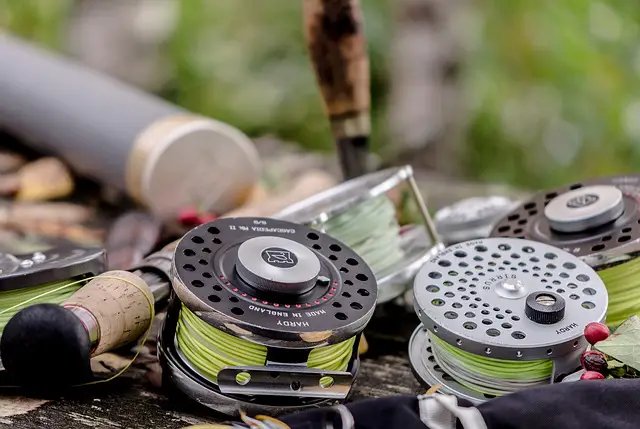
While the rod performs the casting magic, the fly fishing reel is its indispensable partner. Its primary functions are to store your fly line, help balance the rod, and, most critically, provide a reliable drag system for fighting and landing fish.

Types of Fly Fishing Reels: Finding Your Match

The majority of fly fishing reels are “single-action,” meaning one turn of the handle equals one turn of the spool. Within this category, you’ll find variations primarily focused on arbor size and construction. While multiplier and automatic reels exist, single-action designs dominate the modern market.
  • Standard Arbor Reels: Feature a smaller diameter core, allowing for more backing but can lead to line memory and slower retrieve rates.
  • Large Arbor Reels: Have a wider core, reducing line memory, allowing for quicker retrieves, and generally balancing modern rods better. They are the most popular choice today.
  • Automatic Reels: Less common now, these reels use a spring mechanism to retrieve line with the push of a lever. While convenient, they are heavier and lack a reliable drag.

Selecting Your Ideal Fly Fishing Reel

Choosing the right fly fishing reel requires consideration of balance, durability, and a robust drag system. It’s not just a line holder; it’s a critical component in the battle against a strong fish.
  • Matching Rod Weight: Your reel should be sized to balance your chosen fly rod. A balanced setup prevents fatigue and improves casting performance.
  • Drag System: This is crucial, especially for larger fish. A smooth, consistent, and adjustable drag system prevents line breakage and tire out powerful fish. Look for sealed drag systems for saltwater or dirty conditions.
  • Arbor Size: As mentioned, large arbor reels are generally preferred for their quick retrieve and reduced line memory.
  • Construction: Reels are typically made from machined aluminum, cast aluminum, or composite materials. Machined aluminum offers superior durability and precision but comes at a higher price.

The Perfect Pairing: How Rod and Reel Work Together

The true magic of fly fishing emerges from the seamless synergy between your rod and reel. They are not merely individual tools but a cohesive system, each component enhancing the other’s performance. The rod generates the power and leverage for casting, while the reel manages the line and provides the essential control for fighting fish. A properly balanced rod and reel setup feels natural in your hand, reducing fatigue and allowing for more accurate and consistent casts. When a fish strikes, the rod absorbs the initial shock, while the reel’s drag system provides consistent pressure, allowing you to control the fight and eventually land your prize. This harmonious action is what makes fly fishing so engaging and effective.

Mastering the Cast: Essential Fly Fishing Techniques

Proper fly casting techniques are the bridge between your equipment and a successful catch. They require precise timing and coordination between your body, the rod’s flex, and the line’s momentum. While the overhead cast is the most fundamental, various other techniques allow you to adapt to different fishing scenarios.
  • Overhead Cast: The most common, used for general distance and accuracy in open areas.
  • Roll Cast: Ideal for tight spaces with obstructions behind you, using the water’s surface to load the rod.
  • Side Cast: Useful in windy conditions or under overhanging branches, keeping the line low.
  • Spey Casts: A family of casts designed for long rods and heavy lines, primarily on large rivers, allowing casting without much back-casting room.
Each cast requires practice and a keen understanding of how your rod loads and unloads the line. Your reel, while not directly involved in the casting motion, ensures the line is fed smoothly and efficiently, preventing tangles that could disrupt your rhythm.

Investing in Your Fly Fishing Journey

Choosing the appropriate fly fishing rod and reel is more than just buying gear; it’s an investment in your passion and your experience on the water. A well-matched rod and reel setup will not only enhance your casting prowess and fish-fighting ability but also deepen your appreciation for this ancient and beautiful sport. Take the time to research, understand your needs, and perhaps even try out different combinations if possible. Remember, the key is to have your fly fishing rod and reel balance well with each other and with your chosen fly line weight. Happy fishing, and may your casts be true!
Scroll to Top
Skip to content