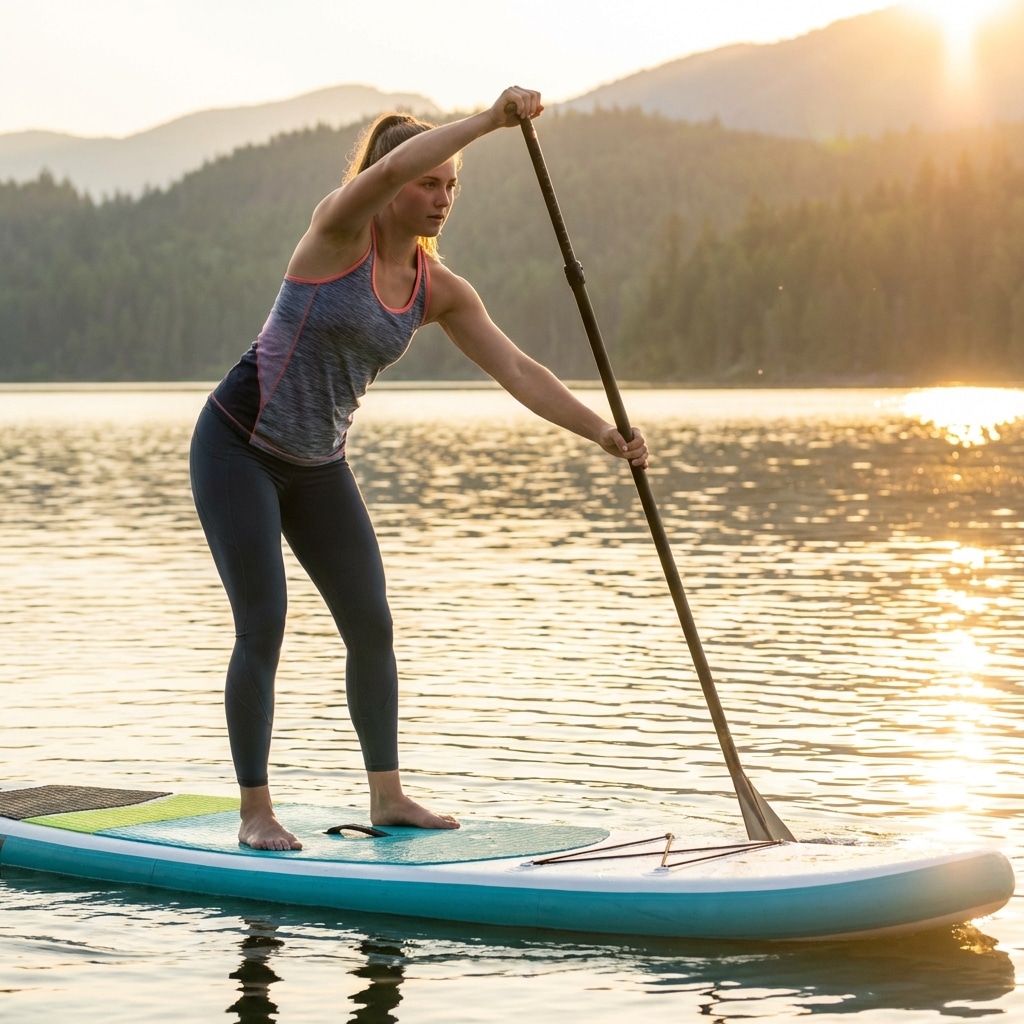
Tired of the same old gym routine? Imagine an invigorating workout that not only torches calories but also immerses you in the tranquility of nature. Welcome to the world of Stand Up Paddleboarding (SUP)!
Once a niche activity, SUP has exploded in popularity, transforming from a lifeguard’s tool into a beloved water sport. It’s more than just a leisurely glide; it’s a dynamic, full-body workout that’s as fun as it is effective for burning calories and boosting your overall well-being.
What Exactly is Stand Up Paddleboarding?
Stand Up Paddleboarding involves standing on an oversized board—similar to a surfboard—and using a long paddle to glide across the water. This versatile activity can be enjoyed on serene lakes, gentle rivers, or even the challenging waves of the open ocean.
SUP offers a unique blend of physical exertion and mental calm. It simultaneously engages your core, arms, and legs, while the peaceful surroundings contribute to a profound sense of mental wellness and stress reduction.
How Many Calories Do You Burn Stand Up Paddleboarding?
Beyond the sheer enjoyment, stand up paddleboarding is a fantastic calorie-burning exercise. However, pinpointing an exact number isn’t straightforward, as your calorie expenditure depends on several key factors.
These variables include your individual body weight, the intensity of your paddling session, and the prevailing environmental conditions. Understanding these can help you better estimate and maximize your **SUP calorie burn**.
Factors Influencing Your SUP Calorie Burn
Body Weight: Simply put, a heavier individual will typically expend more energy to propel themselves and the board through the water. This translates directly to a higher calorie burn.
Workout Intensity: A leisurely cruise on a calm lake will naturally burn fewer calories than an vigorous session battling currents or racing across open water. The harder you work, the more fuel your body consumes.
Environmental Conditions: Mother Nature plays a big role. Paddling against strong winds, battling choppy waters, or navigating currents significantly increases the physical demand and, consequently, your caloric output.
Calorie Burn Estimates: What the Data Says
To give you a clearer picture, Harvard Health Publishing provides insightful estimates for calorie expenditure during paddleboarding. These figures illustrate the significant impact of body weight on your **paddleboarding workout**.
125-pound individual: Can burn approximately 240 calories per hour of paddleboarding.
150-pound individual: Can burn approximately 288 calories per hour of paddleboarding.
185-pound individual: Can burn approximately 355 calories per hour of paddleboarding.
Note: These are estimates for moderate, recreational paddleboarding. Higher intensity will yield greater results.
Maximizing Your Calorie Burn While Paddleboarding
If your primary goal is to amplify your **calories burned paddleboarding**, there are several strategies you can employ to turn your session into a high-octane workout.
Turn Up the Intensity
Integrate High-Intensity Interval Training (HIIT): Alternate short bursts of maximum effort paddling with periods of active recovery (light paddling). This method is incredibly effective for boosting metabolism and burning more calories in less time.
Paddle Stronger and Faster: Consciously challenge yourself to increase your stroke rate and power. Maintaining a higher heart rate throughout your session will directly correlate with a greater caloric expenditure.
Refine Your Technique and Gear
Work on Your Technique: A proper, efficient paddle stroke uses more muscle groups and converts your effort into better propulsion. Consider taking a lesson or watching instructional videos to perfect your form and maximize your **SUP calorie burn**.
Choose the Right Board: While any board works, a narrower, faster touring or race board often requires more balance and effort, pushing your muscles harder.
Consider a Longer Session: Simply extending your time on the water will naturally increase your total calorie burn, even at a moderate pace.
Beyond Calories: The Holistic Benefits of SUP
While **calories burned paddleboarding** is a significant draw, SUP offers a wealth of other health and wellness advantages that make it an exceptional fitness choice.
Full-Body Workout: Engages your core for stability, shoulders and back for paddling, and legs for balance. It’s a comprehensive strength and endurance builder.
Improved Balance and Stability: Constantly engaging your stabilizing muscles, SUP is fantastic for enhancing proprioception and overall balance.
Mental Wellness: The combination of physical activity and being surrounded by nature is a powerful stress reliever. It offers a meditative escape from daily pressures.
Low-Impact Exercise: Gentle on joints, making it suitable for a wide range of ages and fitness levels.
Conclusion: Paddle Your Way to Fitness
Stand up paddleboarding stands out as a uniquely engaging and effective way to achieve your fitness goals. It provides a robust, full-body workout that expertly combines physical challenge with the therapeutic benefits of being on the water.
Whether you’re seeking a leisurely escape or an intense **SUP calorie burn** session, paddleboarding offers a refreshing and enjoyable alternative to traditional workouts. Grab a board, hit the water, and discover a healthier, happier you!