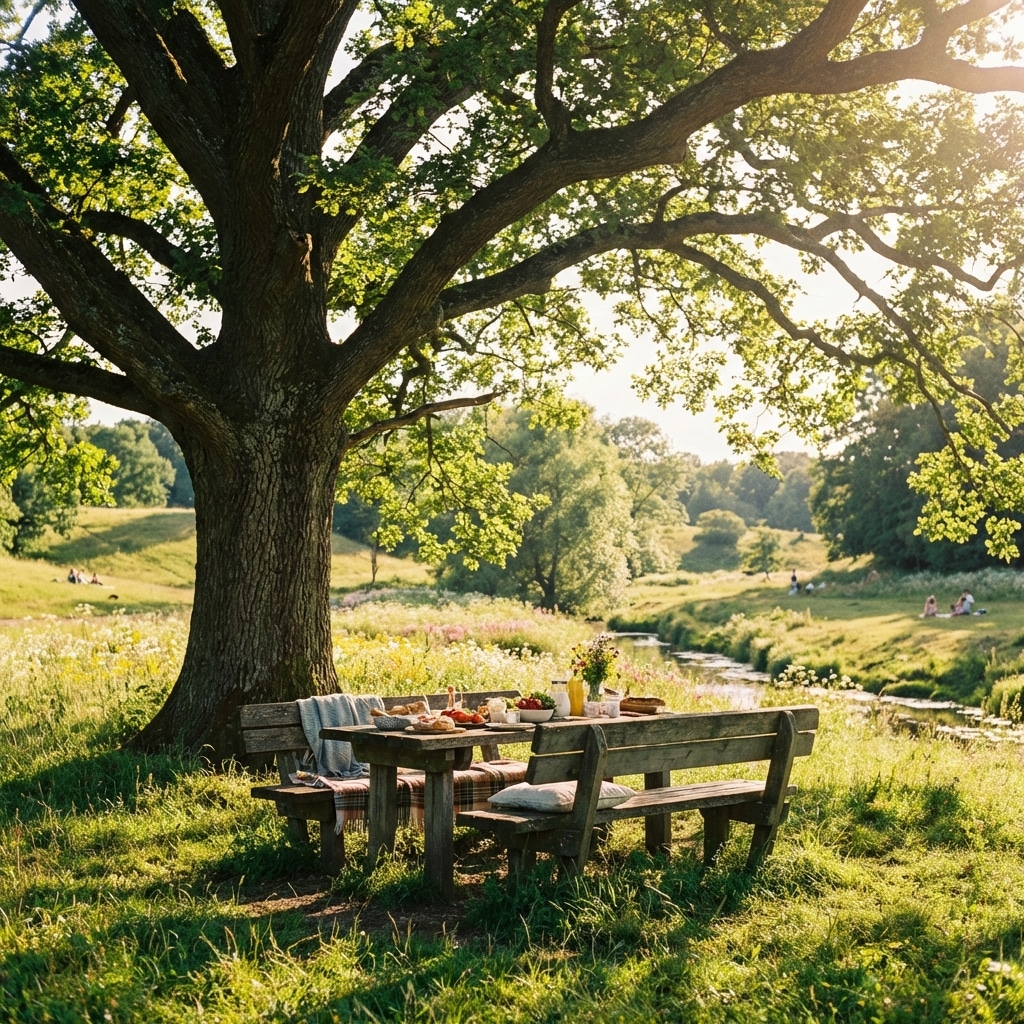
Dreaming of sun-drenched meals and lively gatherings in your backyard? A sturdy, handcrafted picnic table is the perfect centerpiece for your outdoor oasis. Forget flimsy store-bought options – building your own picnic table isn’t just a rewarding weekend project; it’s an investment in quality time and personalized outdoor living. Imagine the satisfaction of crafting a durable piece that perfectly fits your space and style.
Why Build Your Own Picnic Table?
Before we dive into the sawdust, let’s explore why a DIY picnic table stands head and shoulders above store-bought alternatives. Choosing to build offers significant advantages that enhance both your outdoor space and your personal skill set.
Customization Beyond Compare
When you build your own picnic table, you’re not limited by standard sizes or finishes. You can tailor its dimensions to perfectly fit your patio, deck, or yard. Think about adding an umbrella hole, choosing specific wood types, or applying a unique stain that complements your home’s exterior.
Cost-Effectiveness
While there’s an initial outlay for materials, building your own table can be surprisingly economical. High-quality, durable picnic tables from retailers often come with a premium price tag. Your DIY effort typically results in a superior product for less money in the long run.
Durability and Quality You Can Trust
Mass-produced furniture sometimes sacrifices quality for speed. By hand-selecting your lumber and meticulously assembling each joint, you ensure a robust and long-lasting piece. This level of craftsmanship means your table will withstand years of weather and family fun.
Skill Development and Personal Satisfaction
Taking on a woodworking project like this is an excellent way to hone your DIY skills. Even for beginners, building a picnic table is achievable and incredibly rewarding. The sense of pride you’ll feel every time you gather around your handcrafted table is truly unmatched.
Essential Materials & Tools for Your DIY Picnic Table
Ready to roll up your sleeves? Gathering all your materials and tools upfront will ensure a smooth, efficient building process. Here’s what you’ll need for a standard 6-foot wooden picnic table.
Lumber Shopping List
4 pieces of 2×4 lumber, 6 feet long: For the table legs. Ensure it’s pressure-treated for outdoor use.
5 pieces of 2×6 lumber, 6 feet long: For the tabletop planks. Pressure-treated is recommended.
2 pieces of 2×6 lumber, 6 feet long: For the bench planks. Also pressure-treated.
2 pieces of 2×4 lumber, 8 feet long: These will be cut down to create the A-frame cross braces and the main support stringers connecting the A-frames.
Hardware & Finishing Supplies
3-inch galvanized exterior screws: For the main frame connections. Galvanized prevents rust.
2.5-inch galvanized exterior screws: For attaching the tabletop and bench planks.
Wood glue (optional): For additional joint strength, though screws alone are often sufficient.
Sandpaper or an electric sander: To smooth all surfaces and edges.
Exterior wood stain, paint, or sealant (optional): To protect and beautify your table.
Wood filler (optional): For filling any large gaps or screw holes before finishing.
Tools You’ll Need
Measuring tape: For accurate measurements.
Carpenter’s square: Essential for ensuring square cuts and assemblies.
Pencil: For marking cuts.
Circular saw or miter saw: For making precise, straight cuts.
Power drill with driver bits: For pre-drilling holes and driving screws.
Clamps (optional but highly recommended): To hold pieces in place during assembly.
Safety glasses, ear protection, and work gloves: Always prioritize safety!
Step-by-Step Guide: How to Build a Picnic Table
With your supplies ready, let’s transform those raw materials into a beautiful, functional picnic table. Follow these steps carefully for a sturdy and long-lasting result that you’ll be proud of.
Step 1: Precise Lumber Cuts
Accuracy is key in this step. Measure and cut all your lumber to the specified lengths. Take your time, double-check your measurements, and always wear your safety gear.
Legs: From the four 6-foot 2x4s, cut 4 pieces to 36 inches each.
Tabletop Planks: From the five 6-foot 2x6s, cut 5 pieces to 72 inches each.
Bench Planks: From the two 6-foot 2x6s, cut 2 pieces to 72 inches each.
A-Frame Cross Braces: From one of the 8-foot 2x4s, cut 2 pieces to 28 inches each.
Main Support Stringers: From the remaining portions of the 8-foot 2x4s, cut 2 pieces to 60 inches each. (You’ll likely use parts of both 8-foot boards to get these two 60-inch lengths after cutting the cross braces.)
Step 2: Assemble the A-Frame Legs
Now, let’s build the two sturdy A-frame leg structures that will support your entire table. These form the foundation.
Lay two 36-inch 2×4 leg pieces on a flat surface. Position them to form an ‘A’ shape, with the bottoms splayed outwards.
Place one 28-inch A-frame cross brace horizontally between the two legs, roughly 18 inches from the top of the legs. This brace provides stability and a mounting point for the benches.
Ensure the assembly is square using your carpenter’s square. Pre-drill pilot holes to prevent wood splitting, then secure the cross brace to the legs with 3-inch galvanized screws.
Repeat these steps to create your second A-frame assembly.
Step 3: Connect the A-Frames with Main Support Stringers
These long stringers will connect your two A-frames, providing the core structural support for both the tabletop and the benches. They run the length of the table.
Stand your two A-frames upright, roughly 60 inches apart, ensuring they are parallel.
Position one 60-inch main support stringer along the inner side of the A-frame legs near the top, spanning the distance between them. This stringer will serve as a primary support for the tabletop.
Ensure the stringer is level and centered. Pre-drill pilot holes through the A-frame legs into the ends of the stringer, then secure it firmly with 3-inch galvanized screws.
Repeat this process with the second 60-inch main support stringer on the opposite side, ensuring both are parallel and at the same height.
Step 4: Construct and Attach the Tabletop
With the main frame built, it’s time to add the surface for all those delicious picnic spreads! This step brings the table to life.
Lay the five 72-inch 2×6 tabletop planks across the top of the two 60-inch main support stringers.
Arrange them evenly, ensuring they overhang the stringers by an equal amount on each end. You can leave small, consistent gaps between boards for drainage, or butt them up flush.
Secure each tabletop board to both 60-inch stringers using 2.5-inch galvanized screws. Drive the screws from the top of the tabletop boards down into the stringers. For a cleaner look, you can countersink the screw heads.
Step 5: Install the Bench Planks
Now, add the seating! The bench planks attach directly to the outer faces of your A-frame legs.
Take one of the 72-inch 2×6 bench planks. Position it on the outside of one set of A-frame legs.
Determine a comfortable seating height, typically 17-18 inches from the ground. Ensure the bench plank is level and parallel to the tabletop.
Pre-drill pilot holes and secure the bench plank to both 36-inch A-frame legs using 2.5-inch galvanized screws. Drive screws through the bench plank into the leg pieces.
Repeat for the second bench plank on the opposite side. Double-check that both benches are at the same height and evenly spaced from the tabletop.
Step 6: Sanding and Finishing Touches
The hard work is done! These final steps ensure your table is safe, smooth, and protected for years of enjoyment.
Sand All Surfaces: Use sandpaper or an electric sander to smooth all rough edges and surfaces, paying special attention to the tabletop and bench seats. This step is crucial for safety and comfort, preventing splinters.
Clean Thoroughly: Wipe down the entire table to remove any sawdust or debris.
Apply Finish (Optional but Recommended): If you plan on staining or painting, now is the time. Apply an exterior-grade wood stain, paint, or clear sealant according to the product manufacturer’s instructions. This will protect your table from moisture, UV rays, and general wear. Allow ample drying time before use.
Conclusion: Your Handcrafted Picnic Table Awaits!
Congratulations! You’ve successfully learned how to make a picnic table, a durable and beautiful piece of outdoor furniture that will serve your family and friends for years to come. From summer barbecues to quiet morning coffees, your DIY picnic table is ready for countless cherished memories.
Take pride in your craftsmanship and enjoy the satisfaction of creating something truly special with your own hands. This project not only enhances your outdoor living space but also provides you with valuable woodworking experience. Happy building, and even happier picnicking!