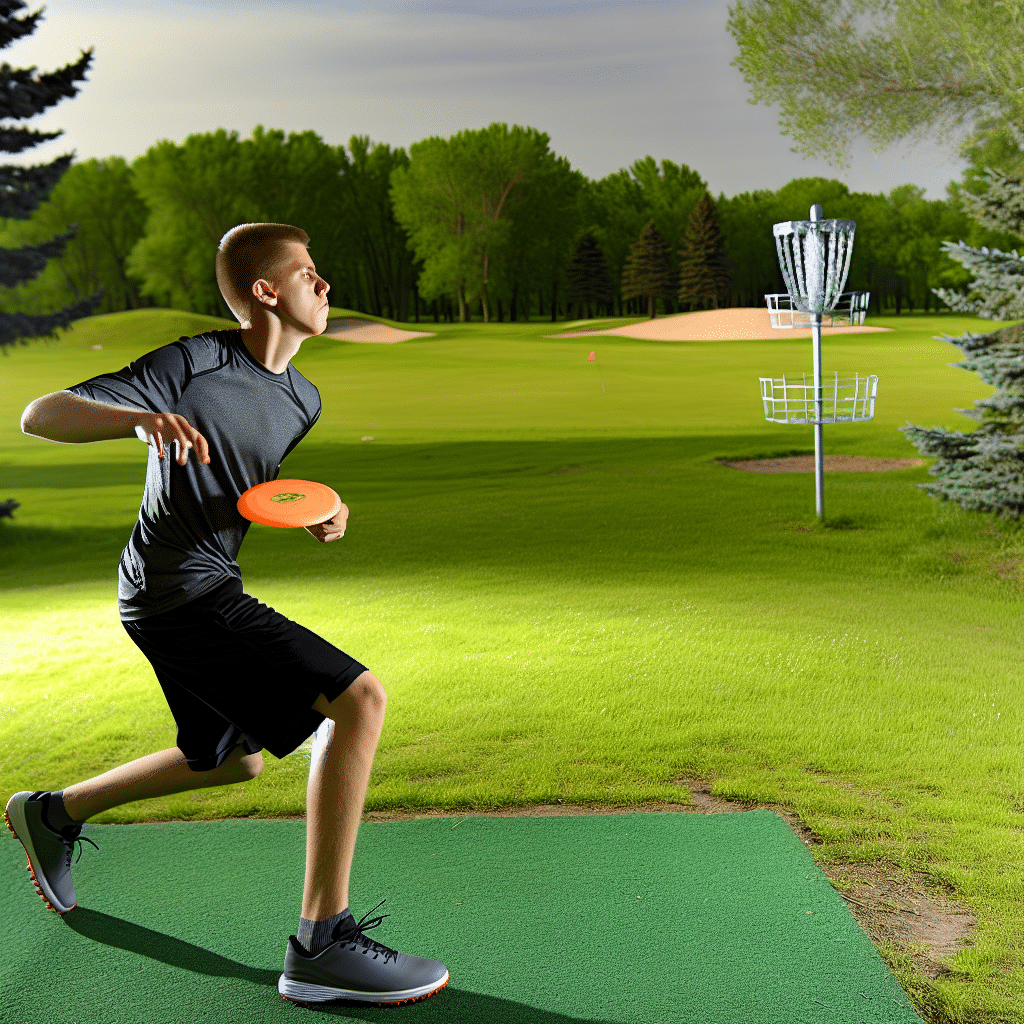
Disc golf: It’s the ultimate blend of skill, strategy, and soaking in the great outdoors. You’ve seen people effortlessly launching discs toward distant baskets, making it look incredibly fun—and maybe a little intimidating. If you’ve ever wondered, “How do I even begin to throw a disc golf disc with accuracy and power?” you’re not alone. Many aspiring players feel overwhelmed by the variety of discs, grips, and throwing techniques.
But what if we told you that with a few fundamental tips, you could go from a complete novice to confidently launching discs down the fairway? This guide is designed to demystify the art of throwing a disc golf disc, giving you the essential knowledge and techniques to start your journey.

What Exactly is Disc Golf?
At its core, disc golf is an outdoor sport where individual players throw a specially designed flying disc from a designated tee area toward a target, typically a metal basket on a pole. The goal is to complete each “hole” (from tee to basket) in the fewest possible throws. It’s a fantastic way to get active, enjoy nature, and challenge your precision and strategy.
Getting Started: Your First Steps to Throwing Disc Golf
Before you even think about your throwing motion, a few foundational elements will set you up for success. Choosing the right disc and understanding the basic grip are crucial.
1. Choosing Your First Disc Golf Disc
Disc golf discs come in various types, each designed for different purposes. For beginners, simplicity and control are key.
- Putter: This is your best friend for starting out. Putters are slow, have a deep rim, and are designed for straight, controlled flights over short distances. They are the easiest to learn with, even for longer throws, because they don’t require high arm speed to fly correctly.
- Mid-Range: Once you gain some confidence, a mid-range disc offers more distance than a putter but still provides good control. They are a great step up for approaching baskets from intermediate distances.
- Driver: While tempting, avoid drivers as a beginner. Drivers are designed for maximum distance, requiring significant arm speed and proper technique to fly predictably. Using them too early often leads to inconsistent, frustrating throws.
Look for discs labeled “understable” – this means they tend to turn right for a right-hand backhand thrower, which can help compensate for common beginner errors and achieve straighter flights.
2. Mastering the Basic Disc Golf Throw: The Backhand
The backhand throw is the most common and often the easiest for beginners to learn effectively. It utilizes a natural arm motion similar to skipping a stone.
The Backhand Grip (Fan Grip for Control)
The Backhand Throw Mechanics: Step-by-Step
3. Introduction to the Forehand (Sidearm) Throw
The forehand, or sidearm, throw is another fundamental technique, especially useful for navigating obstacles or achieving a different flight path. While often more challenging for absolute beginners, it’s a valuable skill to develop.
Mastering Your Throw: Tips for Accuracy and Distance
Once you understand the basic mechanics, these tips will help refine your technique and improve your overall game.
Aiming & Visualization
Before every throw, pick a specific spot you want the disc to go, not just the general direction of the basket. Visualize the disc flying along its intended path, navigating any trees or obstacles. This mental preparation can significantly improve your accuracy.
Body Mechanics & Footwork
Your throw isn’t just an arm movement; it’s a full-body athletic motion. Engage your hips and shoulders, rotating them smoothly as you pull the disc through. Proper footwork, like taking a controlled “x-step” before your backhand, can generate more power and fluidity.
The Importance of a Smooth Release
Avoid “muscling” the disc. A smooth, controlled acceleration through the throwing motion, culminating in a sharp wrist snap, is far more effective than trying to throw with brute force. Focus on clean form over maximum power initially.
Practice Makes Perfect: Drills to Improve Your Game
Like any skill, throwing a disc golf disc requires consistent practice. Don’t get discouraged if your first few throws aren’t perfect; every pro started somewhere!
Conclusion: Grab a Disc and Start Your Journey!
Throwing a disc golf disc might seem daunting at first, but with the right approach, it’s an incredibly rewarding skill to learn. Focus on choosing a beginner-friendly disc, mastering the backhand grip and motion, and remember that consistent practice trumps raw talent every time.
So, what are you waiting for? Grab a putter, find a local course or an open park, and start throwing. You’ll be amazed at how quickly you pick up the basics and begin to enjoy the unique thrill of disc golf!