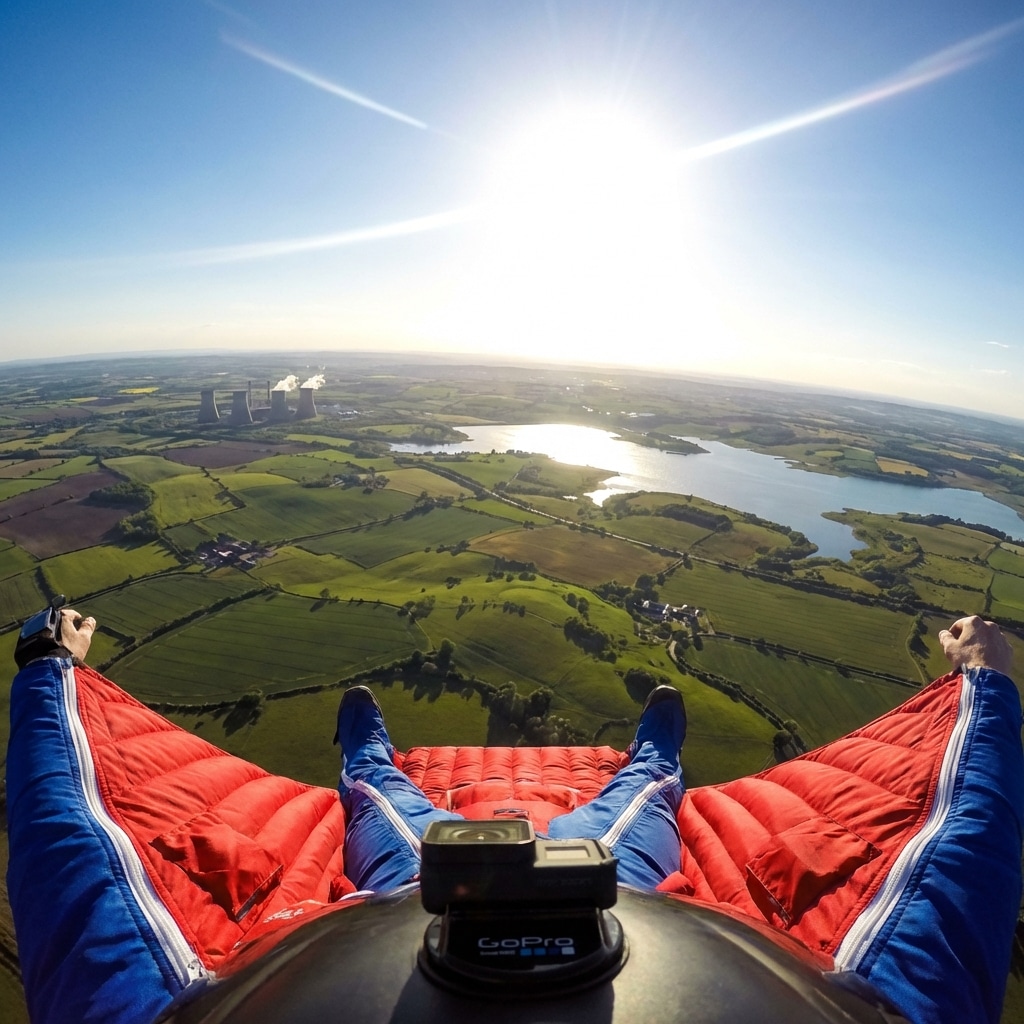
For centuries, the dream of human flight has captivated our imaginations. From ancient myths to the awe-inspiring feats of modern astronauts, the sky has always beckoned. Today, this timeless aspiration finds its most exhilarating expression in the extreme sport of wingsuit flying.
Imagine soaring like a bird, a “man flying wingsuit” through breathtaking mountain ranges, or gliding effortlessly above pristine landscapes. This isn’t science fiction; it’s a reality pushing the boundaries of human innovation and bravery. Dive with us into the heart-pounding world of wingsuit flying, exploring what makes this adventure truly extraordinary.
What Exactly is Wingsuit Flying? The Ultimate Freedom of Flight
At its core, wingsuit flying transforms the human body into an aerodynamic marvel. Unlike traditional skydiving where descent is paramount, a wingsuit allows pilots to achieve remarkable horizontal travel, turning a freefall into a true flight. It’s an intricate dance with gravity and air currents.
Beyond Traditional Skydiving: The Suit’s Ingenious Design
The secret lies in the specialized wingsuit itself, often playfully called a “squirrel suit” or “birdman suit.” This incredible garment features fabric wings stretched between the legs and under the arms, dramatically increasing the body’s surface area. This design is engineered to create lift and reduce drag, fundamentally altering the way a skydiver falls.
Modern wingsuits are masterpieces of engineering, crafted from high-quality, durable materials. Years of research and development have refined their shape, allowing wingsuit pilots unprecedented control and agility in the air.
Mastering the Air: Aerodynamics and Glide Ratios
A wingsuit’s primary function is to convert vertical speed into impressive horizontal speed. By presenting a large, airfoil-like surface to the wind, the suit generates lift, enabling pilots to glide forward with astonishing efficiency. A typical glide ratio for an experienced wingsuit flyer can be around 2.5:1.
This means for every meter descended, a pilot can travel 2.5 meters forward. Piloting a wingsuit is far more than just falling; it demands a deep, intuitive understanding of aerodynamics and constant adjustments to body position. It’s an art honed through rigorous training and extensive practice.
From Skydiver to Sky-Surfer: The Path to Becoming a Wingsuit Pilot
Wingsuit flying is an elite extreme sport that demands more than just courage. It requires exceptional physical fitness, razor-sharp mental acuity, and an unyielding spirit of adventure. Aspiring wingsuit pilots embark on a challenging but rewarding journey.
The Essential Prerequisites: Skydiving Experience is Key
The journey to becoming a certified wingsuit flyer always begins in the world of traditional skydiving. Before even considering a wingsuit, aspirants must complete a significant number of conventional skydives—typically a minimum of 200 jumps. This foundation builds essential air awareness, canopy control, and emergency procedure skills.
These prerequisite jumps ensure that a flyer is comfortable and competent in freefall before adding the complexities of a wingsuit. It’s a crucial stepping stone for safety and proficiency in this demanding discipline.
Specialized Training & Certification: Earning Your Wings
Once the skydiving prerequisites are met, specialized wingsuit training becomes the next vital step. This involves intensive instruction on wingsuit theory, flight techniques, deployment procedures, and emergency protocols specific to the suit. Experienced instructors guide new flyers through their initial wingsuit jumps.
Reputable organizations, such as the United States Parachute Association (USPA), offer structured certification programs. These certifications are not just formalities; they ensure that every wingsuit pilot possesses the knowledge and skills necessary to fly safely and responsibly.
The Science of Soaring: Safety and the Physics Behind the Thrill
While the freedom of wingsuit flying is unparalleled, it inherently comes with significant risks. A deep understanding of the underlying physics and unwavering adherence to stringent safety protocols are absolutely critical. Every flight is a calculated endeavor.
Harnessing the Wind: Understanding Lift, Drag, and Control
Wingsuit flying is a direct application of aerodynamic principles. The suit’s design works to maximize lift and minimize drag, allowing the pilot to control their flight path. Maintaining precise body position, known as “pitch” and “roll,” is paramount for stability and directional control.
Wingsuit pilots constantly adjust their posture to manage speed, altitude, and trajectory. Even the slightest deviation can dramatically impact stability. This requires continuous vigilance and refined control, turning the pilot into an extension of the suit itself.
Minimizing Risk: Essential Safety Protocols and Gear
Safety in wingsuit flying is paramount and begins long before exiting an aircraft or leaping from a cliff. Meticulous pre-jump checks ensure the wingsuit is properly fitted, and all critical equipment—including the main and reserve parachutes, altimeters, and automatic activation devices—is fully functional.
During the flight, maintaining acute situational awareness is non-negotiable. Wingsuit flyers operate with a predetermined “pull altitude,” typically around 4,000 feet, where the parachute must be deployed. Post-flight debriefings are also standard practice, allowing pilots to review performance and identify areas for improvement, continuously enhancing safety standards.
Why They Fly: The Unrivaled Adrenaline and Mental Clarity
What compels an individual to don a wingsuit and launch themselves into the abyss? Beyond the breathtaking physical thrill, wingsuit flying offers a profound emotional and psychological journey. It’s an experience that transcends mere sport.
The Rush of the Unthinkable: Adrenaline and Sensory Overload
Few human experiences can rival the sheer adrenaline surge of wingsuit flying. The initial moments of freefall, the sensation of the suit catching air and generating lift, and the ability to navigate at high speeds create an intense sensory overload. It’s a primal scream of exhilaration fused with absolute control.
This extreme rush is often described as both terrifying and utterly liberating. It’s an immersion into the present moment, where every sense is heightened and the mundane fades away.
Finding “Flow”: A Meditative Experience in Mid-Air
Many wingsuit pilots report entering a unique state of “flow” during their flights. This deep immersion in the activity, where time seems to dissolve and external worries vanish, is a cornerstone of the experience. It’s a profound focus, a oneness with the environment.
This meditative state, achieved amidst incredible speeds and breathtaking vistas, brings a rare clarity and a deep sense of accomplishment. It’s not just about defying gravity; it’s about achieving an extraordinary mental and spiritual connection with the act of flight itself.
The Future of Flight: Innovations in Wingsuit Technology and Beyond
Wingsuit flying is a testament to human ingenuity, constantly evolving with advancements in technology and our ever-deepening understanding of aerodynamics. The future holds exciting possibilities for this dynamic extreme sport.
Advancements in Suit Design and Materials
Researchers and designers are continually refining wingsuit aerodynamics, exploring new materials that offer lighter weight, greater durability, and enhanced performance. Innovations aim to increase glide ratios, improve maneuverability, and potentially even integrate advanced navigation or safety features.
The ongoing evolution means wingsuits are becoming safer and more efficient, expanding the horizons for what a “man flying wingsuit” can achieve. Expect lighter, stronger, and more responsive suits in the years to come.
The Growing Community and Its Impact
The global wingsuit flying community is a vibrant, tight-knit network of passionate individuals. World-class athletes like Jeb Corliss and Roberta Mancino continue to push boundaries, inspiring new generations and showcasing the sport’s incredible potential.
This community fosters shared learning, hosts spectacular competitions, and tirelessly works to promote safety and responsible participation. Their collective passion ensures the spirit of human flight continues to soar.
Conclusion: The Sky’s No Limit for the Modern Wingman
Wingsuit flying embodies the enduring human dream of flight, blending cutting-edge engineering with an unyielding spirit of adventure. It’s a sport where the sky is not a limit, but an expansive playground.
Whether you’re an aspiring wingsuit pilot or simply captivated by the majesty of human flight, the sight of a man flying a wingsuit is truly spectacular. Some dreams are meant to be cherished, but for those daring enough to take the leap, wingsuit flying proves some dreams are meant to be lived.