Dreaming of soaring through the sky, feeling the wind on your face, and experiencing true freedom? For many, the idea of personal flight seems out of reach – complex, expensive, and requiring extensive training. But what if there was an easier, safer, and incredibly exhilarating way to take to the skies?
Enter the paramotoring trike. This innovative aircraft combines the thrill of powered paragliding with the stability and comfort of a three-wheeled chassis, making the dream of flight accessible to a wider audience. Imagine a machine designed for pure enjoyment, where takeoff and landing are simplified, and the joy of flight is paramount.
What is a Paramotoring Trike? Your Personal Flying Machine
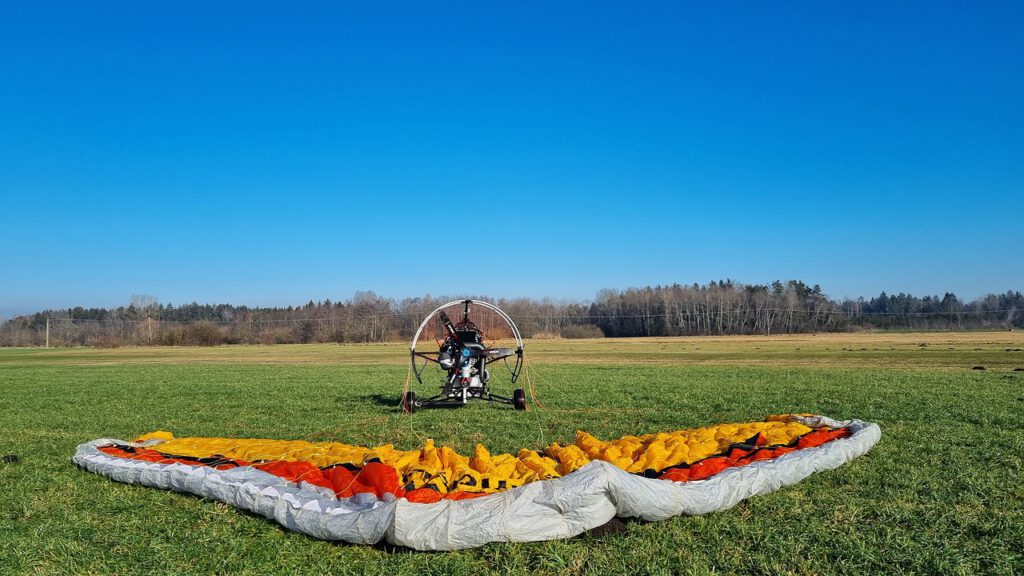
A paramotoring trike, or powered paragliding trike, is essentially a lightweight, three-wheeled carriage with a paraglider wing above it and an engine-driven propeller behind. It’s engineered for simplicity, stability, and pure fun, offering an unparalleled flight experience. Unlike foot-launched paramotors, trikes provide a seated position and ground mobility, making them incredibly user-friendly.
Why Choose a Trike Over Foot-Launched Paramotor?
The fundamental idea behind the trike design is to enhance ease of use and safety. With three wheels, you eliminate the need for running takeoffs and landings, significantly lowering the barrier to entry for many aspiring pilots. It’s like driving a lightweight, open-air aircraft, requiring less physical exertion and offering greater stability.
Sitting comfortably in an airplane-style cockpit, you’re always in control. This design principle, often referred to as “wings below the pilot,” ensures outstanding in-flight stability, making your experience relaxed yet deeply engaging.
Discover the Flight-Design FKS 2 Paramotor Trike: Innovation in the Sky
From the renowned designers at Flight-Design comes the FKS 2 Paramotoring Trike – a testament to precision engineering and a passion for flight. This model isn’t just an aircraft; it’s a gateway to adventure, built on years of aviation expertise and cutting-edge materials.
Unmatched Design & Construction
The FKS 2 stands out as one of the world’s first paramotors to extensively incorporate carbon fiber and Kevlar-carbon technology. This advanced construction results in an exceptionally lightweight yet robust machine, weighing in at just 15 kg (33 lbs) empty. This focus on reduced weight directly translates to enhanced safety, superior performance, and impressive durability.
Power & Performance: Rotax Engine and Flight Capabilities
At the heart of the FKS 2 is the reliable Rotax 503 UL air-cooled engine, delivering a maximum power of 60 hp. This powerful engine, combined with the trike’s lightweight design, provides excellent performance characteristics for diverse flight needs.
Cruising Speed: Enjoy speeds between 75-100 km/h (50-65 mph).
Altitude: Climb comfortably up to 2,500 m (approx. 8,200 ft).
Flight Duration: Fly with one person for up to 1.5 hours, or with two persons for approximately 45 minutes on a standard 45-liter fuel tank.
Takeoff Distance: Remarkably, the FKS 2 requires less than 100 meters for takeoff.
Ergonomics and Ease of Use
The cockpit is meticulously designed for pilot comfort and control, ensuring you feel relaxed yet fully engaged. The FKS 2 streamlines the flying process, minimizing pre-flight preparations for a spontaneous flight experience.
Controls: Standard equipment includes dual controls for training or tandem flights.
Fuel System: Equipped with a 45-liter fuel tank for approximately 3 hours of flight time. Optional configurations can provide extended range.
Adjustability: Adjustable seats, steering bar, and pedals cater to individual pilot preferences.
Ground Handling: A steerable nose wheel assists with easy maneuverability on the ground.
Safety Feature: A rubber air brake facilitates quick, safe descents.
German Engineering & Certification
Every component of the Flight-Design FKS 2 is designed and manufactured in Germany by experienced specialists, ensuring the highest standards of quality and craftsmanship. The paramotor is German type certified (EASA Form 1), making it a safe and approved flying machine for private pilots across Europe and other countries that recognize German safety standards.
Key Specifications at a Glance
Wingspan: 17 m (55 ft 5 in)
Wing Area: 10.5 sqm (114 sqft)
Aspect Ratio: 7.4
Empty Weight: 15 kg (33 lb)
Maximum Take-Off Weight (MTOW): 100 kg (220 lbs)
Standard Fuel Capacity: 45 litres
Your Burning Questions About Paramotoring Trikes Answered
Is a Paramotoring Trike Legal to Fly?
Yes, paramotoring is legal in most of Europe, with EASA (European Union Aviation Safety Agency) providing regulations. Generally, you will need a pilot’s license (PPL or equivalent) to fly. Medical requirements vary; some countries may require a medical certificate, while others, particularly certain states in the US, do not. Always check local aviation regulations.
Is Paramotoring Trike Flying Recommended?
Absolutely! Many consider paramotoring to be one of the most enjoyable forms of personal aviation. It offers a unique, visceral sense of flight that is often described as more intimate than traditional aircraft. With outstanding safety features, portability, and low maintenance costs, it’s an excellent choice for adventure seekers. However, individuals prone to claustrophobia might find the cockpit somewhat confining.
What’s the Cost of a Paramotoring Trike?
While the initial investment for a high-quality paramotoring trike can be significant, the running costs are surprisingly low compared to other aircraft. The ability to own and operate your personal aircraft, without the complexities and expenses of larger planes, offers incredible value and unparalleled freedom.
What’s it Like to Fly a Paramotoring Trike?
Easier and more intuitive than you might expect! Paramotoring trikes boast flying qualities similar to other light aircraft with tricycle undercarriages. Their high wing loading contributes to remarkable stability and ease of handling. Takeoffs are simple, even from relatively small fields, and the slope soaring capability adds another dimension to the experience. It’s a machine designed to bring out your best as a pilot.
Can You Fly a Paramotor Trike Over Cities?
Generally, paramotoring is not prohibited over populated areas, thanks to its inherent safety, simple flying characteristics, and compact size. These attributes make it potentially suitable for urban flights. However, the engine noise can be a drawback in densely populated areas, and specific local airspace regulations always apply, so always check before flying.
What Engine Types Power Paramotoring Trikes?
While the FKS 2 uses a Rotax 503 UL, paramotoring trikes can utilize various engines, often lightweight two-stroke options. Some designs offer an “engine-glider” combination, where the engine can be stowed away in a pod. This configuration offers several advantages:
Free Flight: Enjoy unpowered gliding without the burden of launching, even in no-wind conditions.
Takeoff Flexibility: Possible from small grass strips, especially with lighter 2-stroke engines.
Increased Cruising Speed: Often achieved with specific engine-glider setups.
What’s Included in a Paramotoring Trike Kit?
A complete paramotoring trike kit typically provides almost everything needed to get airborne. This generally includes:
The trike chassis, complete with wheels and cockpit.
The paraglider wing.
The paramotor engine and propeller.
A quality backpack or suitcase for transport.
Essential tools and spare parts.
To complete your flying setup, you will also need to acquire fuel, a suitable pilot harness (if not integrated into the trike seat), and a reserve parachute for added safety.
How Safe are Paramotoring Trikes?
Paramotoring is considered a very safe sport, primarily due to its inherent simplicity and passive safety features. Unlike traditional aircraft, you are not encased in a rigid structure. In the rare event of engine failure, the paraglider wing allows for a controlled, unpowered descent and landing, much like a parachute.
Key passive safety aspects of paragliders include:
Low Speed & Sink Rate: The large wing area allows for slow flight and a gentle descent.
Glide Capability: The ability to glide effectively, even with one side of the wing folded (though unlikely in a trike).
Soft Landings: Descending into a “pillow” of air provides a forgiving landing, minimizing injury risk.
Ready to Take Flight?
The paramotoring trike, especially advanced models like the Flight-Design FKS 2, represents the pinnacle of accessible personal flight. Offering a unique blend of safety, ease of use, and exhilarating performance, it’s an opportunity to truly experience the freedom of the open sky. If you’ve ever dreamt of flying your own plane, this brilliant piece of sports equipment could be your ticket to “heaven.”