Hunting is a tradition steeped in skill, patience, and unwavering respect for safety. At its core, responsible hunting hinges on one critical element: impeccable firearm control. Ensuring your weapon is secure, your muzzle is pointed safely, and you can react quickly when needed isn’t just good practice—it’s paramount for your well-being and everyone around you. But with several ways to carry a firearm in the field, which method truly offers the best control for a safer, more successful hunt?
We’ll explore the strengths and weaknesses of popular carrying methods, helping you understand which one provides the optimal balance of accessibility, stability, and control, ultimately enhancing your hunting experience in 2025 and beyond.
The Uncompromisable Core: Why Firearm Control is Paramount
Before dissecting specific carrying techniques, let’s underline why absolute control over your firearm is non-negotiable. A lack of control directly elevates the risk of accidental discharges, unintended injuries, or even tragic accidents. Superior control means your firearm is always secure, the muzzle consistently points in a safe direction, and you maintain immediate, fluid access for quick target acquisition. These factors collectively contribute to a hunting experience that is not only successful but fundamentally safe.
Understanding Your Options: Popular Firearm Carry Methods for Hunters
Hunters have developed various methods to carry their firearms, each with distinct advantages and disadvantages. Let’s break down the most common approaches.
The Convenient Sling Carry
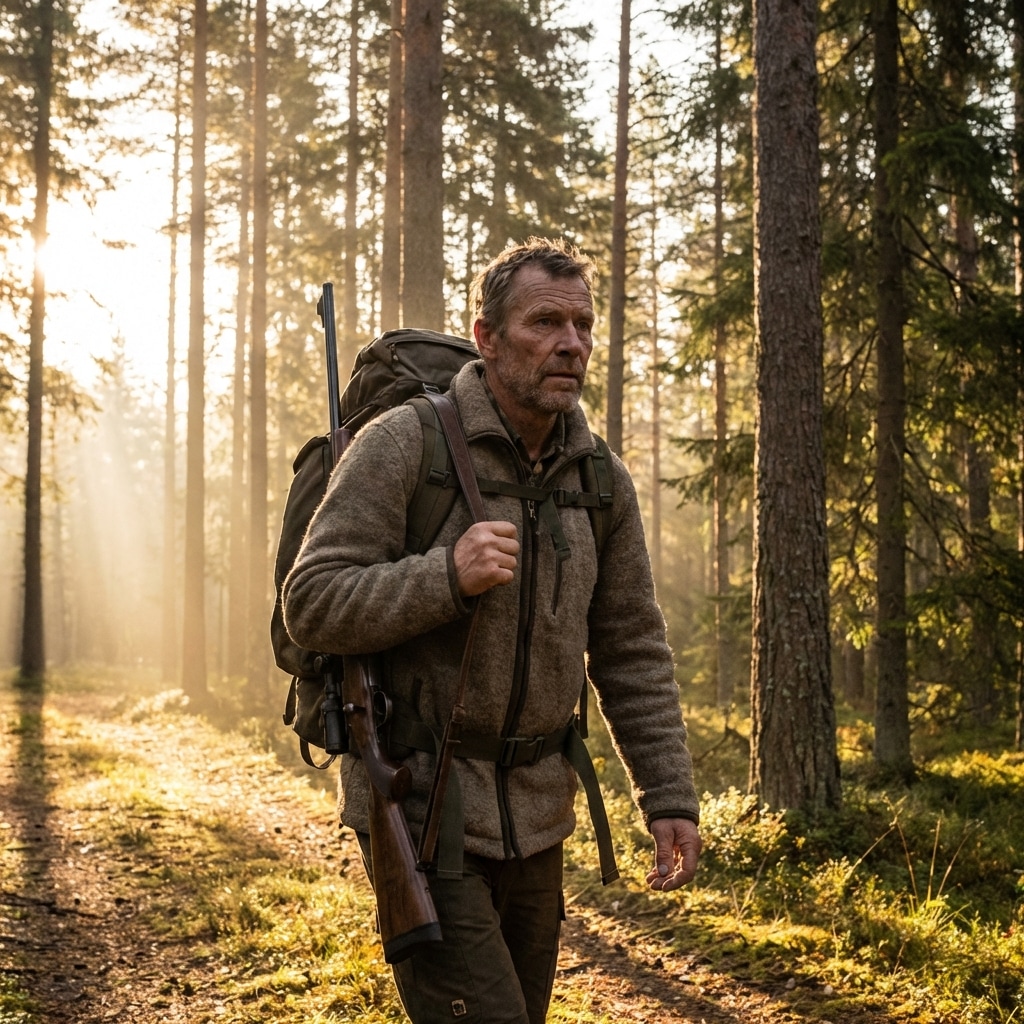
The sling carry is perhaps the most ubiquitous method, where the firearm is draped over your shoulder or across your back. This frees up your hands for other essential tasks like using binoculars, climbing, or navigating difficult terrain.
Pros:
Offers hands-free convenience, ideal for carrying gear or using trekking poles.
Distributes weight across your shoulder or back, significantly reducing fatigue during long treks.
Cons:
Slower to access the firearm when a shot opportunity arises.
Muzzle control can be compromised, especially during quick movements or when traversing uneven ground.
The firearm may snag on brush or branches, potentially leading to an accidental discharge if not secured properly.
The Accessible Cradle Carry
In a cradle carry, the firearm rests comfortably in the crook of your arm, typically with the muzzle angled downwards and slightly forward. This method keeps the weapon readily accessible.
Pros:
Provides relatively quick access to the firearm for fast shooting opportunities.
Offers a comfortable posture for carrying over moderate distances, lessening shoulder strain compared to a sling.
Cons:
Keeps one hand perpetually occupied, limiting your ability to use both hands for other tasks.
Muzzle direction can shift easily, requiring constant vigilance to ensure it remains pointed in a safe direction.
Can become tiring during extended periods, as one arm bears much of the weight.
The Steadfast Two-Handed Carry
The two-handed carry involves holding the firearm with both hands, often resembling a “ready” position with the muzzle pointed down or slightly forward. This method prioritizes immediate control and readiness.
Pros:
Delivers unparalleled control over the muzzle direction, making it easiest to keep pointed in a safe zone.
Offers the quickest access for shooting, as the firearm is already in a shooting-ready position.
Provides maximum stability, significantly reducing the risk of drops or accidental discharges from slips.
Enhances target acquisition speed and readiness for sudden opportunities.
Cons:
Keeps both hands occupied at all times, limiting other manual tasks.
Can be the most physically demanding method, leading to fatigue over long periods or difficult terrain.
The Verdict: Which Carry Method Offers Superior Control?
When evaluating all methods for optimal firearm control, the **two-handed carry** consistently emerges as the top choice. It’s the method that provides the highest degree of safety and readiness, making it the preferred technique for most hunting scenarios where immediate response and muzzle discipline are paramount.
Absolute Muzzle Control: With both hands on the firearm, you maintain complete and instantaneous control over where the muzzle is pointing, allowing for immediate correction to ensure it’s always in a safe direction.
Rapid Responsiveness: This carry places the firearm in a “ready” position, minimizing the time it takes to shoulder the weapon, acquire a target, and take a safe, ethical shot.
Enhanced Stability: Holding the firearm with two hands provides maximum stability against accidental movement, slips, or falls, significantly reducing the likelihood of an unintentional discharge.
While other methods offer comfort or convenience, none match the two-handed carry for its inherent safety and control benefits.
Adapting to the Wilderness: Situational Carry Adjustments
Even with the two-handed carry offering superior control, a smart hunter understands that different environments and situations demand adaptability. Knowing when to temporarily adjust your carry method can enhance both safety and efficiency.
Navigating Dense Terrain
In thick brush, dense forests, or heavy undergrowth, a **sling carry** can be more practical. It frees your hands to push through vegetation, maintain balance, and prevent the firearm from snagging. However, be acutely aware of muzzle direction and potential snags that could compromise safety.
Long-Distance Stalking & Open Areas
For prolonged stalks across open ground where immediate shots might be less likely, the **cradle carry** offers a comfortable compromise. It reduces fatigue while still allowing for relatively quick access should a game animal appear. Always prioritize a safe muzzle direction.
Climbing & Challenging Landscapes
When scaling steep inclines, descending rocky terrain, or crossing streams, keeping your hands free is crucial for balance and safety. In these specific, challenging situations, a **sling carry** is often preferred. Critically, ensure your firearm is unloaded and secured, as control is significantly reduced. Some hunters might even consider securing the firearm in a pack for maximum safety during these maneuvers.
Beyond the Carry: Universal Best Practices for Firearm Safety
Regardless of your chosen carry method, adhering to fundamental firearm safety rules is paramount. These practices form the bedrock of responsible hunting and are non-negotiable.
Always Point the Muzzle in a Safe Direction: This is the golden rule. Never allow your firearm to point at anything you are not willing to destroy.
Keep Your Finger Off the Trigger: Your finger should remain outside the trigger guard, resting along the frame, until you are absolutely ready to shoot and your sights are on the target.
Treat Every Firearm as if it’s Loaded: Even if you’ve checked, always assume a firearm is loaded to maintain maximum vigilance and caution.
Be Sure of Your Target and What’s Beyond It: Positively identify your target and be aware of your backdrop to prevent accidental harm to other hunters, animals, or property.
Be Aware of Your Surroundings: Constantly scan for obstacles, changes in terrain, other hunters, and wildlife that could influence your carry or shot.
Regularly Inspect Your Firearm: Before and after each hunt, check for loose parts, obstructions, or damage that could affect control, accuracy, or safety.
Conclusion: Your Safest Path to a Successful Hunt
In the world of hunting, firearm control is not merely a preference—it’s a sacred responsibility. While several methods exist for carrying a firearm, the two-handed carry consistently offers the highest level of control, ensuring superior muzzle discipline, stability, and quick responsiveness. This makes it the safest and often most effective option for most hunting environments.
However, the wilderness is dynamic. Experienced hunters understand when to judiciously adapt their carry method to specific situations, always maintaining safety as their guiding principle. By prioritizing control and diligently following universal safety practices, you not only enhance your personal safety but also contribute to a more ethical, respectful, and successful hunting experience for all. Choose wisely, practice often, and hunt safely.