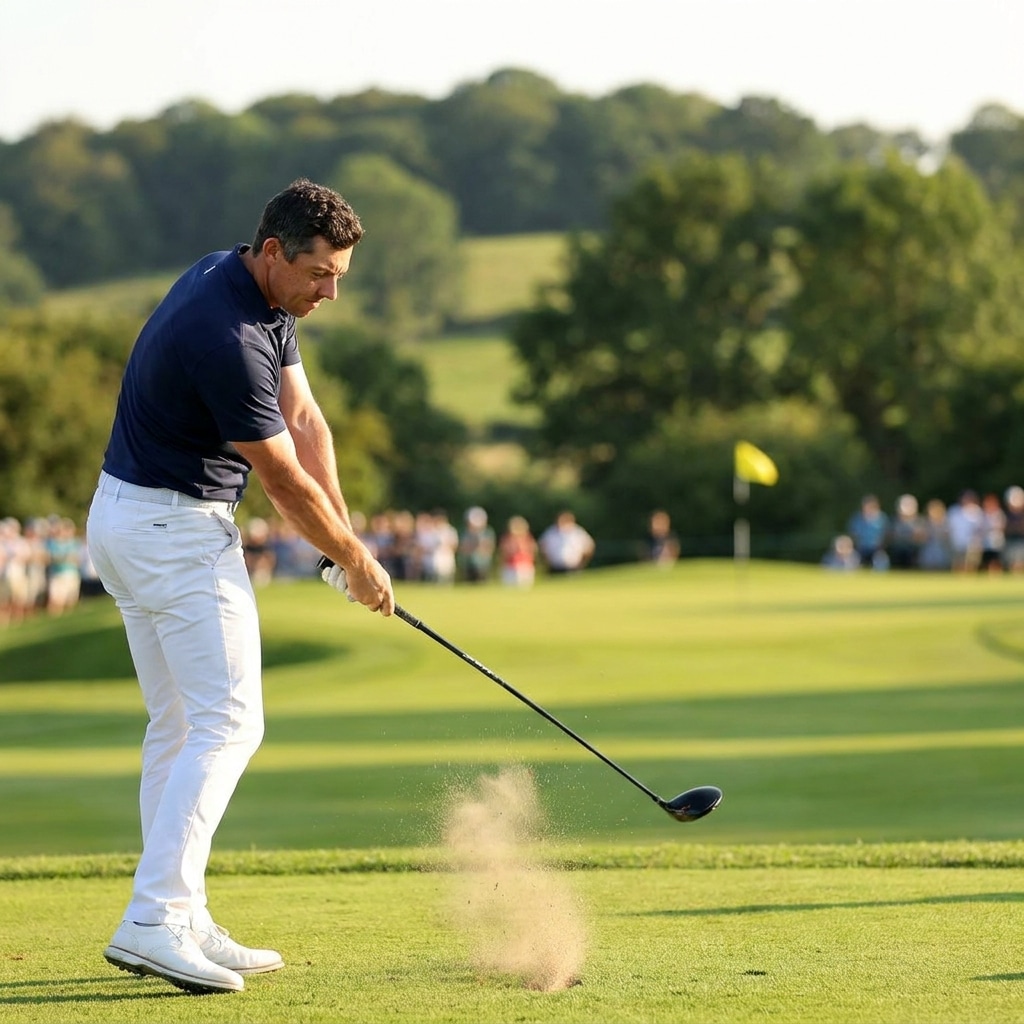
Ever witnessed a golfer erupt in pure joy on the course, perhaps after a seemingly impossible shot? Chances are, they just made an eagle. In the world of golf, where every stroke counts, an eagle is one of the most exciting and sought-after achievements. It’s a moment that can change the entire complexion of a round and even a tournament.
But what exactly does it mean to get an eagle in golf, and why is it so special? Let’s break down this prestigious feat and explore its significance on the green.

What Is an Eagle in Golf?
Simply put, an eagle in golf is when a player completes a hole in **two strokes fewer than its par**. Par represents the expected number of strokes a skilled golfer should take to complete a hole. So, if a hole is a Par-4, an eagle would be achieved by finishing it in just two strokes. On a Par-5 hole, an eagle means holing out in three strokes.
This remarkable feat demonstrates exceptional skill, precision, and sometimes, a little bit of luck. It’s a rare occurrence that significantly boosts a player’s score and morale.
How Does an Eagle Compare to Other Scoring Terms?
Golf’s scoring system is famously themed around birds, ascending in rarity and value:
- Birdie: One stroke under par (e.g., scoring a 3 on a Par-4).
- Eagle: Two strokes under par (e.g., scoring a 2 on a Par-4, or a 3 on a Par-5).
- Albatross (or Double Eagle): Three strokes under par (e.g., scoring a 2 on a Par-5, which is exceptionally rare).
While a birdie is a great achievement, an eagle is even more impressive, and an albatross is almost mythical in its rarity.
How Rare is an Eagle in Golf?
Eagles are uncommon for a reason. For professional golfers, they might occur every few rounds, especially on courses with reachable par-5s. For amateurs, however, securing an eagle can be a once-in-a-lifetime experience.
The difficulty comes from the need for two near-perfect shots. On a par-4, it means a hole-in-one from the tee (an ‘ace’). On a par-5, it requires a powerful drive followed by a precise approach shot that finds the bottom of the cup. The combination of distance, accuracy, and a little fortune makes an eagle a true highlight in any golfer’s career.
Memorable Eagles in Golf History
While eagles are rare, some have occurred at pivotal moments, etched into the annals of golf history. Here are a few instances where players made headlines with their incredible two-under-par shots:
Perfect Approach Eagle At Pebble Beach
In a U.S. Open warm-up event, amateur golfer James Lepp hit his approach shot on the par-5 7th hole at Pebble Beach to within 3 feet of the cup, setting up an easy eagle putt.
Lee Westwood’s Ryder Cup Eagle
During the intense 2008 Ryder Cup, European stalwart Lee Westwood made a crucial eagle on the par-4 3rd hole during singles play at Valhalla Golf Club in Louisville, KY, showcasing his clutch performance.
Paul Lawrie’s Open Championship Eagle
At the 2005 British Open held at the historic St. Andrews, Paul Lawrie delivered an impressive eagle on the iconic 11th hole (par-5) by hitting his second shot to within a mere 2 feet of the cup.
Adam Scott’s Muirfield Eagle
During the 2013 British Open in Scotland, Adam Scott thrilled spectators by making eagle with an exquisite approach shot that landed within 3 feet of the cup on the challenging par-5 17th hole at Muirfield.
Justin Rose’s Olympic Gold Eagle
At the 2016 Summer Olympics, Justin Rose dramatically eagled the par-4 15th hole during the final round. This pivotal shot helped propel him towards winning the gold medal, adding an eagle to his Olympic glory.
Essential Golf Scoring Terms Explained
Understanding an eagle is just one piece of the puzzle. Here’s a quick guide to other fundamental scoring terms every golfer should know:
- Par: The predetermined number of strokes an expert golfer should take to complete a hole.
- Birdie: One stroke under par on a single hole.
- Bogey: One stroke over par on a single hole.
- Double Bogey: Two strokes over par on a single hole.
- Triple Bogey: Three strokes over par on a single hole.
- Albatross (Double Eagle): Three strokes under par on a single hole (e.g., a 2 on a Par-5).
- Hole-in-One (Ace): Hitting the ball directly from the tee into the hole on the first stroke, most commonly on a par-3.
Beyond Scoring: Other Key Golf Terms
Familiarity with these general golf terms will further enhance your understanding of the game:
- Mulligan: An unofficial do-over shot, often used in casual play, where a player retakes a shot without penalty.
- Handicap: A numerical measure of a golfer’s ability, allowing players of different skill levels to compete fairly.
- Fore!: A warning shout used to alert others that a golf ball has been hit in their direction.
- Green: The area of finely manicured grass around the hole where putting takes place.
- Tee Box (or Teeing Ground): The designated area from which players start each hole by hitting their first shot (the tee shot).
- Chip Shot: A short, low shot played from around the green to get the ball onto the green and rolling towards the hole.
- Putt: A shot made with a putter on the green to roll the ball into the hole.
- Foursome: A group of four golfers playing together, or a specific type of match play involving two pairs of players.
Conclusion: Celebrating the Eagle
An eagle in golf is more than just a score; it’s a testament to skill, precision, and the unpredictable magic of the game. Whether you’re a seasoned pro or just starting, understanding this term, and the entire “birdie-eagle-albatross” hierarchy, deepens your appreciation for golf’s unique scoring system.
The next time you hear a roar on the course, you’ll know exactly what it means – someone just flew high with an eagle!