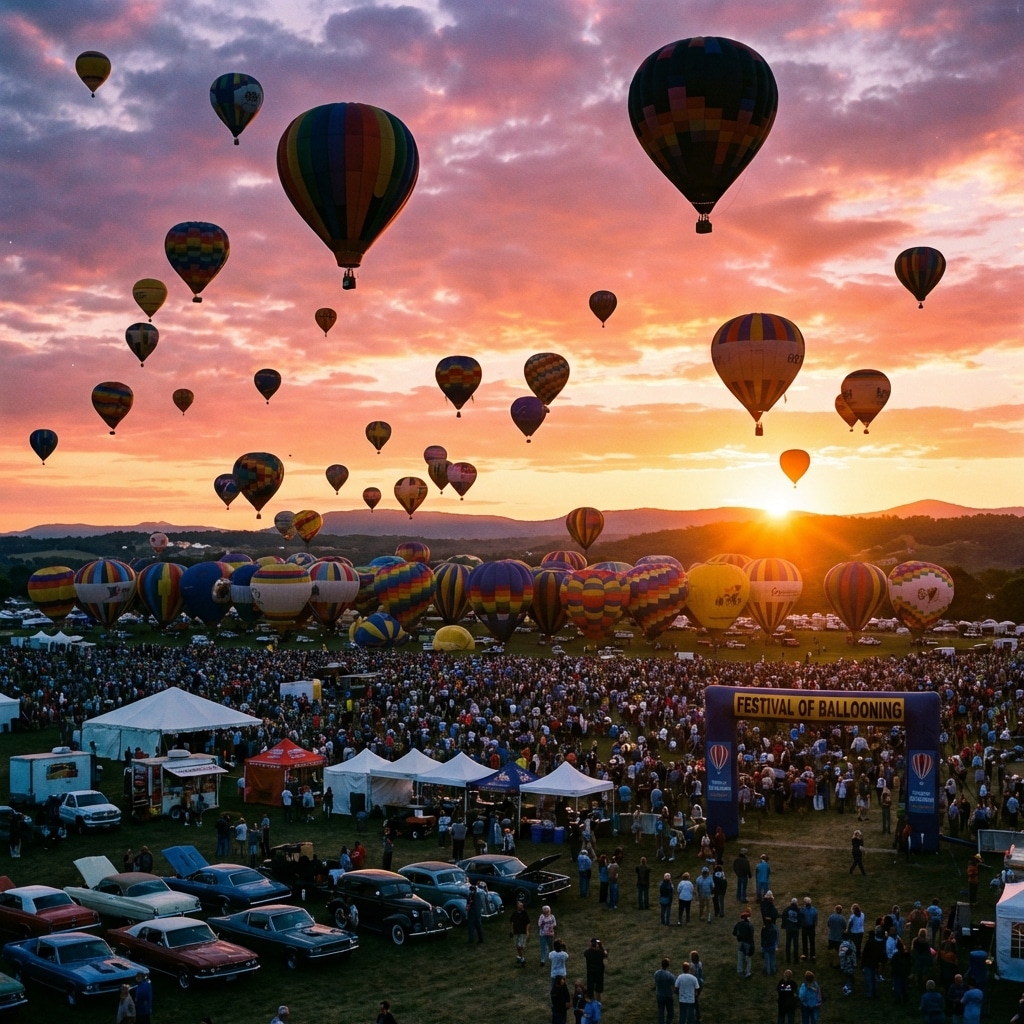
Have you ever gazed up at the sky and imagined floating effortlessly among the clouds, looking down on the world with a sense of wonder and tranquility? For centuries, humanity has dreamt of defying gravity, and hot air ballooning transforms that ancient dream into a breathtaking reality. It’s more than just a ride; it’s an immersive experience that blends history, science, and unparalleled adventure.
But how do these magnificent giants of the sky actually work? What makes them soar, and what incredible stories lie behind their invention? Join us as we explore the fascinating world of hot air ballooning, uncovering its origins, the physics that keeps it aloft, and the unforgettable magic it offers.
What Exactly is Hot Air Ballooning?
At its core, hot air ballooning is a form of lighter-than-air flight. Unlike airplanes that use lift generated by wings or helicopters that rely on rotating blades, hot air balloons ascend by heating the air inside a massive fabric envelope. This heated air becomes less dense than the cooler air surrounding the balloon, creating buoyancy that lifts the entire craft and its passengers skyward.
It’s a deceptively simple concept that delivers an incredibly profound experience, offering a unique perspective on landscapes that few other modes of travel can provide.
A Journey Through Time: The Origins of Balloon Flight
The human desire to fly is ancient, but the practical realization of hot air ballooning is surprisingly recent. It predates powered flight by over a century, marking a pivotal moment in aviation history.
The Montgolfier Brothers’ Triumph
The true birth of modern ballooning traces back to 1783 with the French brothers Joseph-Michel and Jacques-Étienne Montgolfier. After observing smoke rising, they theorized that a bag filled with hot air would float. Their experiments culminated in the first public demonstration of a hot air balloon carrying a sheep, a duck, and a rooster in September 1783.
Just two months later, in November 1783, they achieved the first untethered manned flight, with two brave individuals soaring over Paris for approximately 25 minutes. This groundbreaking achievement captured the world’s imagination and opened the skies to humanity.
From Experiment to Adventure
While early ballooning involved significant risk and was largely experimental, the fundamental principles laid by the Montgolfiers paved the way for future innovations. Over time, advancements in materials, burner technology, and safety protocols transformed ballooning from a scientific marvel into a popular recreational and adventure activity enjoyed worldwide.
The Science of Soaring: How Hot Air Balloons Work
Understanding the mechanics behind hot air ballooning reveals a beautiful dance between physics and engineering. It’s all about density and buoyancy.
The Principle of Buoyancy
The core principle is Archimedes’ Principle applied to air. When the air inside the balloon’s envelope is heated, its molecules spread out, making it lighter (less dense) than the cooler, denser air outside. This difference in density creates an upward buoyant force, much like a boat floating on water, which lifts the balloon.
Pilots control altitude by regulating the heat in the envelope. More heat means more lift; less heat allows the balloon to descend.
Anatomy of a Hot Air Balloon
A hot air balloon typically consists of three main components:
The Envelope: This is the large fabric bag, often made of ripstop nylon, which holds the heated air. Its massive size is crucial for generating enough lift.
The Burner: Positioned directly above the basket, the burner uses propane to generate a powerful flame that heats the air inside the envelope.
The Basket (Gondola): Usually made of wicker, the basket carries the pilot and passengers. Wicker is surprisingly lightweight, durable, and flexible, absorbing impacts during landing.
Beyond the Basics: The Art of Piloting a Hot Air Balloon
While the science is straightforward, piloting a hot air balloon is a true art form requiring immense skill, experience, and an intuitive understanding of the environment. It’s far more complex than simply “floating.”
Mastering the Winds
Unlike planes with steering wheels, balloons have no rudder or propeller. Pilots navigate by ascending or descending to different altitudes, where wind currents often blow in varying directions. A skilled pilot can “steer” the balloon by finding the right wind layer to move towards a desired general direction. This requires keen observation and precise altitude control.
Launch and Landing Precision
Successful launches and landings are hallmarks of an expert pilot. They demand a thorough understanding of local weather patterns, wind speeds, air temperatures, and topographical features. Every launch and landing site presents unique challenges, making each flight a distinct adventure. Pilots must continuously assess conditions to ensure passenger safety and a smooth journey.
The Unforgettable Experience: Why Ballooning Captivates
Beyond the mechanics and history, the real allure of hot air ballooning lies in the unparalleled experience it offers. It’s an adventure that touches the soul and creates lasting memories.
Serenity and Stunning Vistas
Imagine drifting silently above the landscape, the only sounds being the occasional whoosh of the burner and the gentle whisper of the wind. Hot air ballooning provides a serene, almost meditative, escape from the hustle and bustle below. The panoramic views from hundreds or thousands of feet up are simply breathtaking, transforming familiar landscapes into awe-inspiring tapestries.
Sunrise and sunset flights are particularly magical, painting the sky with vibrant hues and casting long shadows across the earth, offering photographers and adventurers alike an unrivaled spectacle.
A Bucket-List Adventure
For many, a hot air balloon ride is a once-in-a-lifetime item on their bucket list. Whether it’s soaring over the fairy chimneys of Cappadocia, the majestic Serengeti, or the rolling vineyards of Napa Valley, the unique perspective and tranquil feeling of flight make it an experience unlike any other. It’s an opportunity to connect with the world from a completely fresh vantage point.
Safety First: Understanding Ballooning Risks
While the thought of floating freely can feel daunting, hot air ballooning has an excellent safety record, thanks to rigorous training and stringent regulations. However, like any adventure activity, it’s not entirely without risks.
Weather’s Role
The primary factor influencing safety is weather. Unpredictable winds, thunderstorms, or poor visibility can pose significant hazards. This is why reputable balloon operators adhere to strict weather guidelines, often postponing or canceling flights if conditions aren’t optimal. Your safety is always their top priority.
Certified Pilots and Regulations
All commercial hot air balloon pilots undergo extensive training, accumulate hundreds of flight hours, and must pass demanding examinations to earn their pilot licenses, often regulated by national aviation authorities (like the FAA in the United States). Operators also follow strict maintenance schedules and safety checks for all equipment. Choosing a certified and reputable company is crucial for a safe and enjoyable flight.
Ready to Take Flight?
Hot air ballooning is a timeless pursuit that continues to captivate hearts and minds across generations. It’s a profound testament to human ingenuity and our enduring desire to explore the unknown. From its humble beginnings with the Montgolfier brothers to the breathtaking adventures it offers today, ballooning remains a unique blend of science, skill, and sheer wonder.
So, if you’re seeking an extraordinary perspective on the world, an escape into serene tranquility, or simply the thrill of gentle flight, a hot air balloon ride promises an unforgettable journey into the heart of the sky. Are you ready to defy gravity and create memories that will last a lifetime?