Do you ever dream of soaring like a bird, gazing down at the world below with nothing but the wind beneath your wings? For those seeking an unparalleled blend of adrenaline and serenity, paragliding isn’t just a sport—it’s an invitation to experience true aerial freedom. Forget rigid structures and complex machinery; paragliding offers a raw, intimate connection with the sky. But what exactly is this captivating adventure, and could it be your next great escape?
Let’s unravel the magic of paragliding, from its origins to the incredible sensation of flight, and discover why it’s captivating adventurers worldwide.
What Exactly *Is* Paragliding? Your Ticket to the Skies
At its core, paragliding is a recreational and competitive adventure sport where pilots fly lightweight, free-flying foot-launched aircraft called paragliders. Unlike traditional parachutes designed for descent, a paraglider is engineered for *flight*. It uses advanced aerodynamic principles to generate lift.
Picture a large, inflatable wing, typically crafted from durable nylon or dacron fabric. This flexible wing maintains its shape through air pressure entering vents in the front, creating an airfoil that allows you to glide effortlessly through the air. You sit comfortably in a harness suspended beneath this wing, controlling your direction and speed with lines attached to the trailing edge.
From Parachute to Pure Flight: The Origin of Paragliding
The story of paragliding begins not with soaring, but with descent. Its roots are firmly planted in the evolution of parachuting technology. In the late 1960s and early 70s, engineers sought ways to make parachute landings more precise and gentle for skydivers.
This quest led to the development of “ram-air” parachutes, which featured cells that inflated to create an aerofoil shape, providing significant glide. Soon, intrepid individuals realized these sophisticated parachutes could be launched from mountainsides, not just dropped from planes. By the early 1980s, paragliding emerged as its own distinct sport, rapidly evolving with specialized wings and harnesses designed purely for flight.
The Science of Soaring: How a Paraglider Works
While the sight of a paraglider gracefully arcing through the sky might look like magic, the physics behind it are straightforward and fascinating. It’s all about harnessing the power of air and gravity.
Understanding Lift and Control
Launch: A paraglider pilot typically launches by running down a gentle slope or cliff face. As they run, air fills the wing’s cells, inflating it into its aerodynamic shape above them.
Lift: Once inflated and moving forward, the air flowing over the curved upper surface of the wing travels faster than the air beneath it. This pressure difference creates lift, pulling the pilot into the air.
Steering: The pilot controls the paraglider using two steering lines (brakes) connected to the trailing edge of the wing. Pulling a line on one side slows that side, causing the wing to turn. Pulling both lines simultaneously slows the glider, used for landing or reducing speed.
Thermals & Ridge Soaring: Experienced pilots extend their flights by utilizing rising columns of warm air (thermals) or air deflected upwards by geographical features (ridge lift). This allows for sustained flight and even cross-country journeys.
Your Safety in the Sky: Training and Equipment
Safety is paramount in paragliding. It’s an adventure sport, but with proper training and equipment, the risks are significantly mitigated. You wouldn’t drive a car without lessons, and flying is no different.
Comprehensive Training is Essential
Embarking on a paragliding journey requires instruction from certified schools and experienced instructors. Training typically involves:
Ground Handling: Learning to control the wing on the ground, understanding how it reacts to wind.
Tandem Flights: Often the first experience, flying with an instructor to get a feel for the air.
Solo Flights: Gradual progression to supervised solo flights from small hills, learning launch, flight, and landing techniques.
Theory: Understanding meteorology, aerodynamics, flight regulations, and emergency procedures.
Most countries have certification systems (e.g., USHPA P-ratings, BHPA ratings) that guide pilots through different skill levels.
Essential Paragliding Gear
The Paraglider Wing: Categorized by EN ratings (A, B, C, D) indicating passive safety and performance suitable for different skill levels.
Harness: A comfortable seat for the pilot, connecting them to the wing, often equipped with back protection.
Reserve Parachute: An emergency parachute, deployed manually if the main wing encounters an unrecoverable issue.
Helmet: Protecting the pilot’s head during launch, landing, and in case of turbulence.
Variometer: An instrument that indicates vertical speed (how fast you’re climbing or sinking), crucial for finding thermals.
Radio & GPS: For communication with instructors or other pilots, and navigation.
The Paragliding Experience: Freedom Redefined
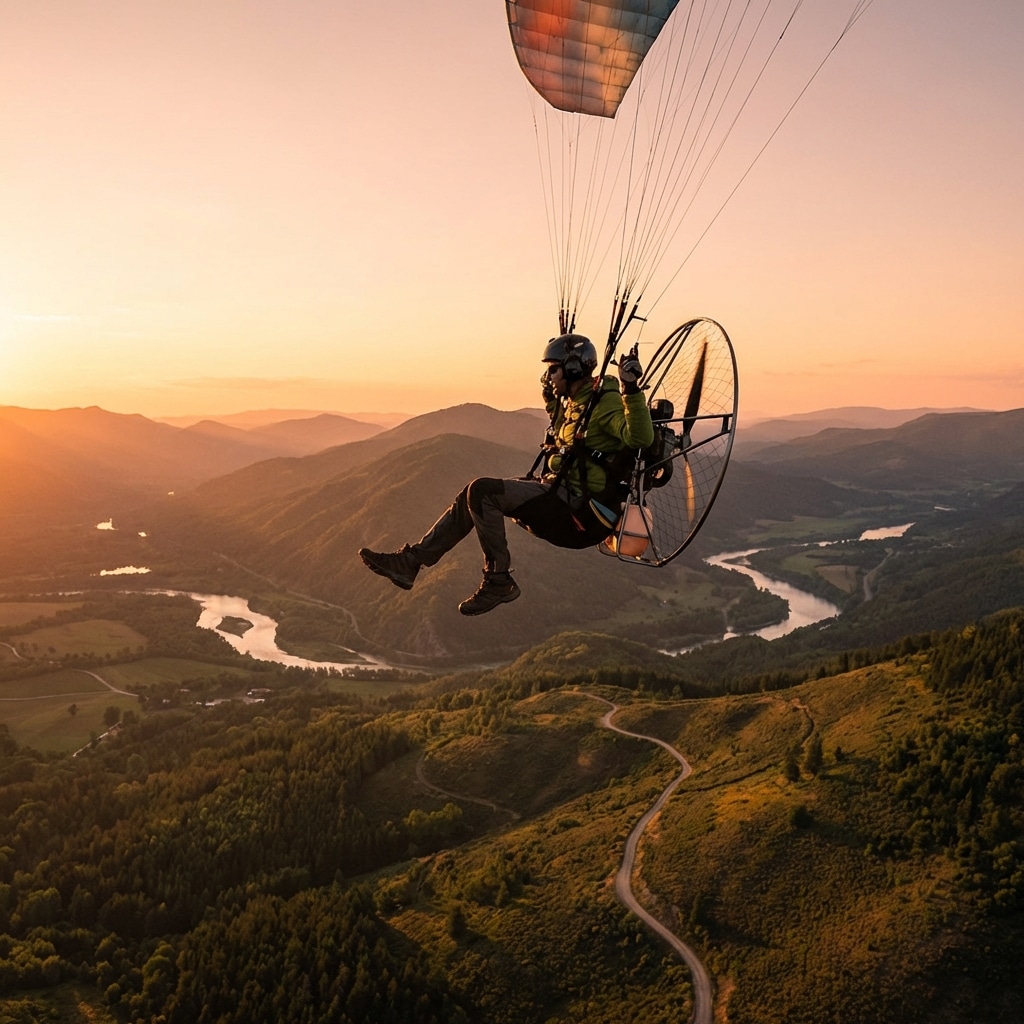
What does it truly feel like to paraglide? Imagine stepping off a mountain and gently floating away, suspended in an open-air theatre with panoramic views. The sensation is often described as profoundly peaceful yet exhilarating.
A Bird’s-Eye View Like No Other
Unlike enclosed aircraft, you are completely exposed to the elements, feeling the wind on your face and hearing the soft rustle of your wing. The silence is often the most striking aspect, broken only by the whispers of the air and the occasional click of your variometer. Below you, landscapes unfold in breathtaking detail – mountains, valleys, coastlines, and forests all painted from a unique perspective. It’s an experience that fosters a deep connection with nature and an incredible sense of personal accomplishment.
Where to Find Your Wings: Popular Paragliding Spots
Paragliding is a global sport, with incredible launch sites in almost every corner of the world. Some iconic destinations draw pilots from far and wide:
French Alps (e.g., Annecy, Chamonix): Renowned for stunning mountain scenery and reliable thermal conditions, ideal for cross-country flights.
Nepal (Pokhara Valley): Offering incredible views of the Himalayas, often combined with cultural immersion.
California, USA (Torrey Pines, Santa Barbara): Coastal cliffs provide excellent ridge soaring opportunities with consistent sea breezes.
Oludeniz, Turkey: Famous for its incredibly beautiful blue lagoon and stunning tandem flight experiences.
Brazil (Rio de Janeiro): Iconic launches offering unparalleled views of Christ the Redeemer and Guanabara Bay.
Each location presents its own unique challenges and rewards, from calm coastal glides to epic high-altitude mountain flights. Always research local conditions and regulations before planning your trip.
Ready to Embrace the Sky?
Paragliding truly offers an escape from the ordinary, combining the thrill of extreme sport with moments of profound tranquility. It’s a journey of self-discovery, challenging your limits while rewarding you with unparalleled beauty and a sense of freedom that lingers long after you’ve touched down.
Whether you dream of leisurely glides or aspire to epic cross-country adventures, the world of paragliding awaits. Are you ready to take the leap and see the world from a brand new perspective?