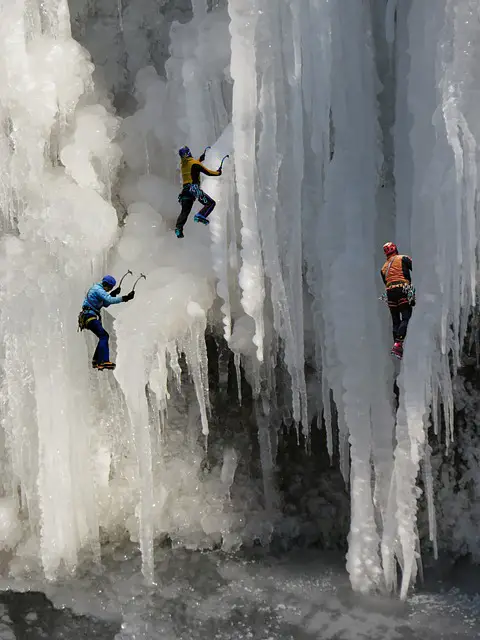
Ice climbing: a thrilling, demanding dance with gravity on frozen waterfalls and vertical ice. While skill and courage are paramount, your equipment forms the critical foundation for every ascent. Among all your gear, your ice climbing boots are arguably the most vital link between you, your crampons, and the ice itself.

They’re not just footwear; they are an engineered extension of your body, designed to transfer force, provide insulation, and secure your indispensable crampons. Choosing the right pair of boots for ice climbing isn’t just about comfort—it’s about safety, performance, and unlocking your full potential on the ice.

Why Your Ice Climbing Boots are Non-Negotiable
Traditional mountaineering boots form the foundation for modern ice climbing footwear, but ice climbing boots are specifically adapted to the unique demands of vertical ice. Their design focuses on a few critical factors that directly impact your climbing success.
The Power of Stiffness
Unlike flexible hiking boots, the best ice climbing boots feature an exceptionally stiff midsole-to-outer sole construction. This rigidity is crucial for efficient power transfer from your legs to your crampons.
As renowned alpinist Andy Kirkpatrick explains, “A boot with a flexible sole will absorb some of the energy you apply and dissipate it as heat.” This lost energy means more effort for less gain, making a stiff boot essential for precision and endurance on challenging climbs.
Precision Fit for Performance and Safety
A proper fit is paramount. Your ice climbing boots must hug your foot securely, minimizing internal movement. This “low volume” fit, as Kirkpatrick notes, allows for tight lacing and precise control over your crampons.
An ill-fitting boot can lead to blisters, cold feet, and, most critically, compromised control. When every crampon placement matters, a snug fit ensures confidence and stability, reducing the risk of a misstep or potential injury.
Key Features of the Best Ice Climbing Boots
Beyond stiffness and fit, several other features define superior boots for ice climbing:
- Insulation: Ice climbing occurs in extreme cold. Excellent insulation, often multi-layered, is vital to prevent frostbite and keep your feet warm during long belays or exposed climbs.
- Durability: Your boots will take a beating. High-quality materials and robust construction ensure they withstand frequent contact with ice, rock, and sharp crampons without failing.
- Crampon Compatibility: Modern ice climbing boots are designed to integrate seamlessly with technical crampons. They feature rigid toes and heels for automatic (step-in) crampon binding systems, providing the most secure connection.
- Waterproofing: Keeping your feet dry is just as important as keeping them warm. Fully waterproof membranes and sealed seams are standard.
Understanding Double Boots: The Gold Standard
For most ice climbers, especially those new to the sport or tackling colder, higher-altitude objectives, double boots are the preferred choice. These specialized ice climbing boots offer distinct advantages:
- Removable Liners: Double boots consist of an outer shell and a removable inner bootie. This allows you to dry the liners inside your sleeping bag, essential for multi-day trips.
- Superior Warmth: The layered construction provides exceptional insulation, making them ideal for the coldest conditions.
- Adjustable Fit: The lacing systems on both the inner and outer boots allow for fine-tuning the fit and insulation level, adapting to different conditions or sock thicknesses.
- Growth Potential: For new climbers, double boots offer a protective and forgiving option, allowing room for skill development while keeping feet warm and secure.
Crampons and Boots: A Perfect Partnership
The “bumps and spikes” on a mountain climber’s shoes are, of course, crampons—an indispensable piece of ice climbing gear. Their effectiveness is entirely dependent on their secure fit to your boots.
For technical ice climbing, automatic or semi-automatic crampons are preferred, as they offer the most rigid and secure attachment to the specialized lugs on your ice climbing boots. A precise match between your specific boots and crampons is critical for a stable and efficient platform on vertical ice.
Essential Ice Climbing Gear (Beyond Boots)
While your boots are foundational, remember the full kit. In addition to high-quality ice climbing boots and compatible crampons, you’ll need:
- Ice Tools: Often referred to as ice axes, these are your primary climbing implements.
- Helmet: Non-negotiable for protection from falling ice and rock.
- Harness: For rope work and safety.
- Rope: Dynamic ropes are used for lead climbing and rappelling.
- Ice Screws: For creating anchors in the ice.
- Belay Device and Carabiners: For managing ropes.
- Prusiks or V-Thread Tools: Essential for building emergency anchors or self-rescue.
Common Questions About Ice Climbing Boots
What is the best type of boots for ice climbing?
For most ice climbers, especially beginners, double boots with removable liners, stiff soles, and integrated crampon compatibility are the optimal choice. They offer superior warmth, protection, and versatility across a range of conditions and climbing styles.
Can you use ice climbing crampons for mountaineering?
Yes, absolutely. Many technical crampons designed for ice climbing are also excellent for mountaineering, especially on glaciated terrain or mixed climbs. The key is ensuring they are the correct style and size for your chosen boots and that they fit securely.
Why are quality ice climbing boots so expensive?
The price reflects the highly specialized design, premium materials, and meticulous craftsmanship required for these technical pieces of equipment. Boots for ice climbing must withstand extreme cold, abrasion, and intense force while providing reliable safety. Investing in high-quality boots is an investment in your safety and performance.
How do I know if my boots are “broken in”?
Unlike hiking boots, technical ice climbing boots don’t typically “break in” in the traditional sense, as their stiffness is a design feature. A truly good fit feels secure from the start, with no significant pressure points or heel lift. If you find your boots feel too loose, or you can easily slip your foot in without much resistance, they might be lacking the necessary stiffness or are simply the wrong size/volume for your foot.
Gear Up for the Vertical World
Selecting the right ice climbing boots is a critical decision that impacts every aspect of your climb. By prioritizing stiffness, a precise fit, insulation, and crampon compatibility, you equip yourself for a safer, more efficient, and ultimately more enjoyable experience on the ice.
Do your research, try on various models, and remember that your boots are not just footwear—they are a crucial partner in your pursuit of vertical frozen beauty.