Purging: Place your clams in a bucket of fresh, cool saltwater (or even tap water with a tablespoon of salt) for at least an hour, or up to several hours. The clams will naturally filter the water, expelling sand. Change the water a couple of times until it remains clear.
Cleaning the “Guts”: Many clammers prefer to shuck and clean the internal organs of razor clams before cooking, especially for frying. There are numerous online tutorials and local resources demonstrating the best techniques for this, typically involving splitting the clam open and removing the dark digestive tract.
Cooking Your Fresh Razor Clams
The tender, sweet meat of razor clams shines in a variety of dishes. Whether you’re a seasoned chef or a novice cook, these fresh clams are incredibly versatile.
Pan-Fried: A classic preparation. Dip cleaned clams in egg wash and breadcrumbs, then fry quickly until golden brown.
Steamed: Steam clams with garlic, butter, and white wine for a simple yet elegant dish.
Chowder: Razor clams make an incredible, flavorful clam chowder that rivals any restaurant version.
Fritters: Chop them up and mix into a savory batter for delicious clam fritters.
Why Clam Digging on Long Beach, Washington, is an Unforgettable Experience
Clam digging on Long Beach, Washington, is more than just a pastime; it’s an authentic Pacific Northwest experience that blends outdoor recreation with the satisfaction of harvesting your own food. It’s an opportunity to create lasting memories with family and friends against the stunning backdrop of the Washington coastline.
From the thrill of discovering your first “show” to savoring the freshest seafood imaginable, this adventure is truly unique. So, pack your gear, check those tide tables, and get ready for an unforgettable journey to Long Beach – where nature, adventure, and delicious razor clams await! Happy digging!
Dreaming of fresh seafood straight from the source? Imagine the thrill of digging your own dinner from the pristine sands of the Pacific Coast. Long Beach, Washington, isn’t just a picturesque getaway; it’s a premier destination for one of the most unique and rewarding outdoor activities: clam digging.
This iconic Pacific Northwest tradition offers a perfect blend of adventure, connection with nature, and the ultimate culinary reward. Whether you’re a seasoned local or planning your first family coastal escape, this guide provides everything you need to embark on an unforgettable clam-digging expedition in Long Beach.
What is Clam Digging? Your Introduction to a Coastal Delicacy
Clam digging is the age-old practice of harvesting bivalve mollusks from their sandy habitats along the shoreline. On Long Beach, Washington, the star of the show is undoubtedly the Pacific razor clam (Siliqua patula), celebrated for its firm, sweet, and incredibly flavorful meat. These aren’t just any clams; they’re a prized delicacy.
The experience goes beyond simply gathering food. It’s an immersive activity that connects you directly to the vibrant ecosystem of the Washington coast. With the rhythmic crash of waves and the expansive ocean views as your backdrop, clam digging transforms a simple harvest into an exhilarating outdoor adventure perfect for all ages.
Planning Your Long Beach Clam Adventure: Timing is Everything
Success in clam digging hinges on two critical factors: knowing when to go and understanding local regulations. The right timing dramatically increases your chances of a bountiful harvest.
Understanding Tides and Seasons for Razor Clams
Minus Tides are Prime: The absolute best time to dig for razor clams on Long Beach is during a “minus tide.” These are exceptionally low tides that expose more of the beach where clams reside, typically occurring in the evenings or early mornings around new and full moons.
Official WDFW Announcements: Razor clam seasons and specific digging dates are strictly managed by the Washington Department of Fish and Wildlife (WDFW) to ensure sustainable harvesting. Always check the official WDFW website (wdfw.wa.gov) for approved dates, times, and open beaches before planning your trip. These dates are announced frequently and can change based on clam populations and toxin levels.
Essential Regulations & Licenses for Clam Diggers
Shellfish/Seaweed License: Every individual aged 15 and older must possess a valid Washington State shellfish/seaweed license. These can be purchased online through the WDFW website or at various local vendors.
Daily Limit: The WDFW enforces a strict daily limit of 15 razor clams per person. This limit is regardless of size or condition, and you must keep the first 15 clams you dig.
Fill Your Holes: After extracting your clams, always refill your holes. This practice is crucial for beach safety, preventing hazards for other visitors, and protecting the delicate beach ecosystem.
Conservation: Respect the environment. Adhere to all rules and help preserve this incredible resource for future generations.
Your Essential Clam Digging Gear Checklist
While clam digging is relatively simple, having the right tools makes the experience much more enjoyable and productive. Here’s what you’ll need to gear up for success:
WDFW Shellfish/Seaweed License: Your ticket to legal digging (don’t forget this!).
Clam Gun or Shovel:
Clam Gun: A cylindrical tube with a handle, designed to create suction, pulling clams out of the sand. Ideal for soft sand.
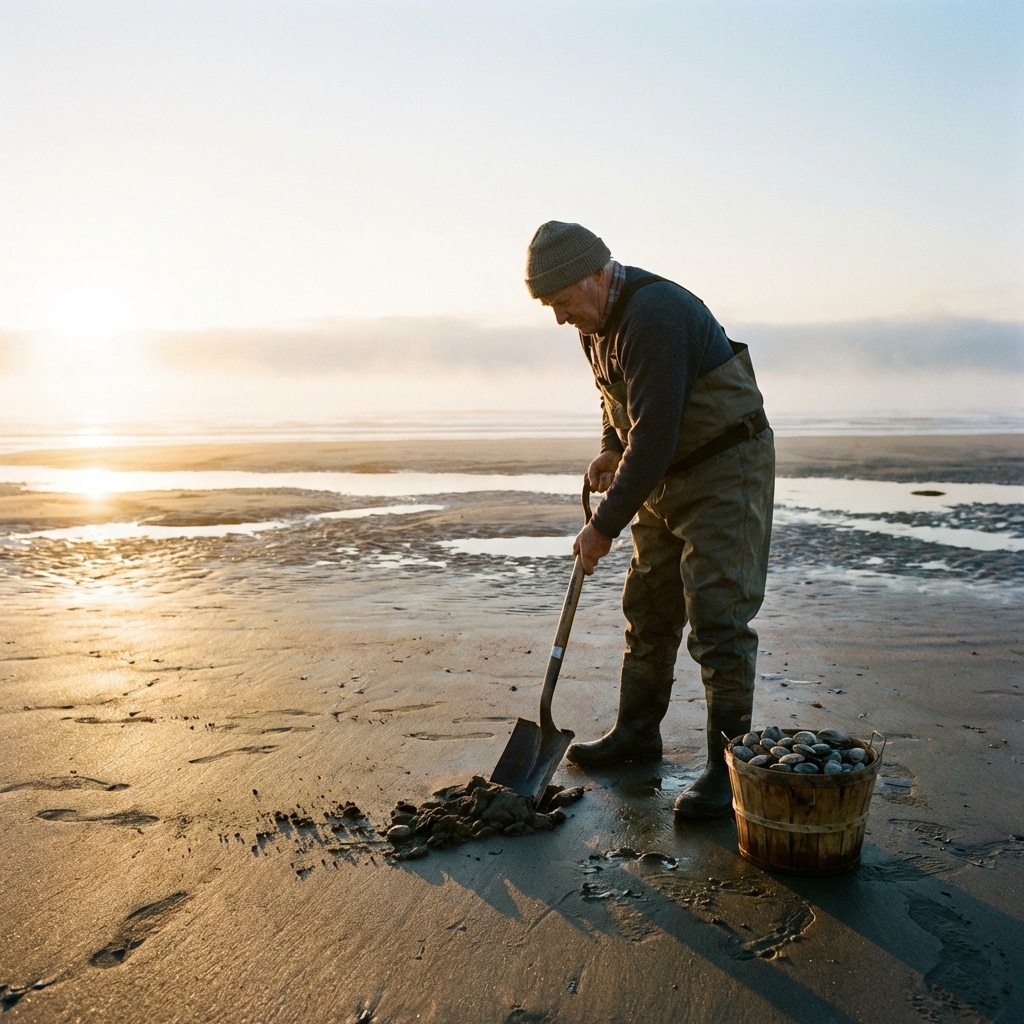
Clam Shovel: A long, narrow-bladed shovel, perfect for digging down and scooping out clams. Some prefer shovels for firmer sand or larger clams.
Bucket or Mesh Bag: For safely storing your precious catch. A mesh bag allows sand and water to drain.
Waders or Waterproof Boots: You’ll be working near the waterline, so keeping your feet dry and warm is essential, especially during cooler months.
Gloves: Protect your hands from shells and the cold.
Flashlight or Headlamp: If you’re digging during early morning or late evening minus tides, a reliable light source is indispensable.
Warm, Layered Clothing: Pacific Coast weather can change quickly. Dress in layers to stay comfortable.
How to Successfully Dig for Razor Clams: A Step-by-Step Guide
With your gear ready and the tide receding, it’s time to hit the sand! Follow these steps for a fruitful clam-digging adventure on Long Beach, Washington.
Locate the “Show”: Walk along the exposed beach, keeping an eye out for small indentations or “dimples” in the sand, often accompanied by a small mound. These are the “shows” – indicators that a razor clam is buried beneath. Some shows might even have a faint “squirt” of water as you approach.
Position Your Tool: Center your clam gun or shovel directly over the show.
Insert and Extract (Clam Gun Method): Push the clam gun straight down into the sand around the show, covering the air hole with your thumb to create suction. Once deep enough (about 10-12 inches), pull the tube straight up, keeping the air hole sealed. Once out of the sand, release your thumb to dump the sand and reveal your clam.
Insert and Extract (Clam Shovel Method): Dig quickly and carefully behind the show, creating a funnel-shaped hole towards where the clam is likely buried. Razor clams can burrow astonishingly fast, so speed is key! Scoop out the sand in a deliberate motion, aiming to expose the clam.
Retrieve Your Clam: Gently grasp the exposed clam. Be careful not to break the fragile shell.
Store Your Catch & Fill the Hole: Place your razor clam into your bucket or mesh bag immediately. Remember to completely refill your digging hole before moving on to the next show.
Repeat: Continue searching for shows and digging until you reach your WDFW-mandated limit of 15 clams per person.
From Beach to Plate: Cleaning and Cooking Your Catch
Congratulations, you’ve successfully harvested your own razor clams! Now, it’s time to prepare them for a delicious meal.
Cleaning Your Razor Clams
Before cooking, it’s crucial to clean your clams to remove any lingering sand or grit.
Purging: Place your clams in a bucket of fresh, cool saltwater (or even tap water with a tablespoon of salt) for at least an hour, or up to several hours. The clams will naturally filter the water, expelling sand. Change the water a couple of times until it remains clear.
Cleaning the “Guts”: Many clammers prefer to shuck and clean the internal organs of razor clams before cooking, especially for frying. There are numerous online tutorials and local resources demonstrating the best techniques for this, typically involving splitting the clam open and removing the dark digestive tract.
Cooking Your Fresh Razor Clams
The tender, sweet meat of razor clams shines in a variety of dishes. Whether you’re a seasoned chef or a novice cook, these fresh clams are incredibly versatile.
Pan-Fried: A classic preparation. Dip cleaned clams in egg wash and breadcrumbs, then fry quickly until golden brown.
Steamed: Steam clams with garlic, butter, and white wine for a simple yet elegant dish.
Chowder: Razor clams make an incredible, flavorful clam chowder that rivals any restaurant version.
Fritters: Chop them up and mix into a savory batter for delicious clam fritters.
Why Clam Digging on Long Beach, Washington, is an Unforgettable Experience
Clam digging on Long Beach, Washington, is more than just a pastime; it’s an authentic Pacific Northwest experience that blends outdoor recreation with the satisfaction of harvesting your own food. It’s an opportunity to create lasting memories with family and friends against the stunning backdrop of the Washington coastline.
From the thrill of discovering your first “show” to savoring the freshest seafood imaginable, this adventure is truly unique. So, pack your gear, check those tide tables, and get ready for an unforgettable journey to Long Beach – where nature, adventure, and delicious razor clams await! Happy digging!