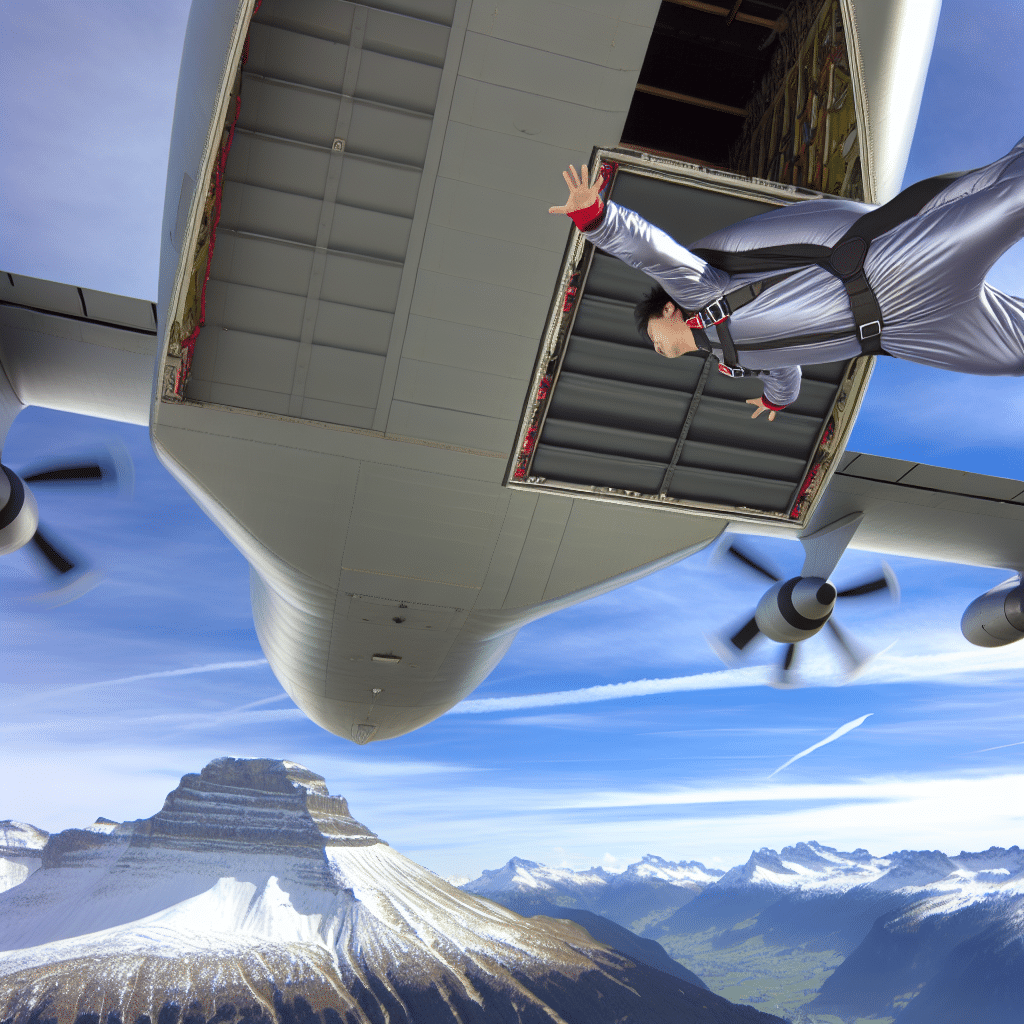
Imagine soaring through the sky, not just gracefully gliding back to earth, but aiming for a target as audacious as it is improbable: flying directly into the open cargo hold of a moving airplane. Sounds like something ripped from a Hollywood blockbuster, right? For a select few, this isn’t fantasy – it’s the pinnacle of extreme aviation sports, a breathtaking challenge that redefines the limits of human flight and daring.
This isn’t just about speed or altitude; it’s a meticulously choreographed dance between human skill, advanced aerodynamics, and precision piloting. It’s the ultimate adrenaline rush, pushing the boundaries of what we thought was possible in the realm of extreme sports. Are you ready to dive into the world where gravity is just a suggestion?
What is Wingsuit Flying? The Ultimate Human Flight Experience
Before we delve into the extraordinary, let’s understand the foundation: wingsuit flying, often referred to as wingsuiting. This incredible sport involves wearing a specialized jumpsuit that transforms the human body into a veritable flying machine. Fabric membranes connect the arms to the torso and between the legs, significantly increasing surface area.
Equipped with this suit, participants leap from elevated points – be it a cliff, a mountain, or an aircraft – and experience the closest sensation to true human flight. They navigate through the air using subtle body movements, soaring and gliding with astonishing control.
While the exhilaration is unparalleled, the risks are substantial. Wingsuit flying demands not only peak physical condition but also flawless judgment and rigorous safety protocols. It’s a sport where the margin for error is razor-thin, and mistakes can have fatal consequences.
The Impossible Made Real: Wingsuiting into a Moving Aircraft
Now, elevate that concept: instead of simply landing, imagine maneuvering your wingsuit directly into the open rear ramp of a moving cargo plane. This isn’t a casual jump; it’s a high-stakes, precision operation demanding perfect timing from everyone involved.
The wingsuit flyer must meticulously calculate their trajectory, speed, and approach angle, aligning perfectly with an aircraft that’s cruising at a specific altitude and velocity. It’s a challenge that tests the absolute limits of human perception, reaction, and courage.
Defying Gravity: The Soul Flyers’ Historic Mid-Air Entry
While the idea might seem futuristic, this astounding feat has actually been accomplished. In 2017, two legendary wingsuit pilots, Fred Fugen and Vince Reffet – collectively known as the “Soul Flyers” – made history. They successfully entered a moving plane over the majestic Swiss Alps.
Their daring stunt captivated the world, proving that what was once confined to action movie scripts could become reality. It instantly became a landmark achievement, inspiring a new generation of extreme athletes and redefining the very essence of possibility in aerial sports.
Mastering the Extreme: Training, Technique, and Mindset
Physical Prowess and Endurance
Attempting such a monumental stunt requires an athlete in absolute peak physical condition. Wingsuit pilots must possess exceptional core strength, cardiovascular fitness, and overall body control to withstand the intense g-forces and manage their flight path with millimeter precision. This isn’t just a sport; it’s an extreme physical discipline.
Years of Skill Development
No one starts by flying into a plane. The journey begins with extensive skydiving experience, accumulating hundreds, often thousands, of jumps. From there, pilots transition to wingsuit flying, gradually mastering advanced maneuvers and building an intuitive understanding of aerial dynamics over many years.
Unshakeable Mental Fortitude
Perhaps even more critical than physical strength is mental toughness. Wingsuit flyers must maintain absolute composure under unimaginable pressure, make lightning-fast decisions, and execute flawlessly. Visualization techniques and meticulous planning are vital for minimizing risk and ensuring success.
The Aerial Ballet: Synchronization of Pilot, Plane, and Tech
The Pilot’s Indispensable Role
This stunt is a dual act. The aircraft pilot’s role is as crucial as the wingsuit flyer’s. They must maintain an incredibly stable and precise flight path, holding exact speed and altitude while keeping the cargo door open and steady, essentially creating a moving target that tolerates zero deviation.
Advancements in Aviation Technology
Modern technology plays an increasingly vital role in making these stunts feasible and safer. High-precision GPS systems, real-time communication tools, and aerodynamically optimized wingsuit designs all contribute to tighter tolerances and greater control, pushing the envelope of safety and success.
What’s Next? The Future and Ethics of Ultimate Extreme Sports
Wingsuit flying into a plane represents a thrilling new frontier in extreme sports, challenging our very perception of human capability. As technology evolves and athletes continue to refine their skills, we can anticipate even more astonishing aerial feats in the years to come, setting new benchmarks for adventure in 2025 and beyond.
However, such monumental endeavors inevitably spark ethical debates. The inherent risks are profound, and the potential for catastrophic accidents is ever-present. This raises important questions: How far is too far? Should such incredibly dangerous activities be regulated more strictly to protect participants, or is the pursuit of ultimate freedom worth any risk?
Conclusion: The Edge of Human Endeavor – Bravery or Madness?
Wingsuit flying into a moving plane stands as one of the most compelling and perilous challenges in the entire spectrum of extreme sports. It demands an unparalleled fusion of skill, precision, and raw courage, truly pushing the very boundaries of human potential.
This feat captivatingly showcases the incredible resilience and daring of the human spirit. Yet, it also serves as a stark reminder of the monumental risks involved, walking that impossibly fine line between awe-inspiring bravery and sheer madness. Whether it will ever become a more widespread discipline remains to be seen, but its legacy as a pinnacle of extreme achievement is undeniably cemented.